


Intro
U.S. President Donald Trump concluded his two-day visit to China on Friday without securing major trade agreements or concrete assistance from Beijing in addressing the ongoing Iran conflict.
Beijing
Trump’s visit marked the first trip by a sitting U.S. president to China since his previous visit in 2017. The visit was widely seen as an attempt to strengthen economic cooperation and improve Trump’s domestic political standing ahead of crucial midterm elections in the United States. However, analysts noted that the meetings yielded more symbolic gestures than substantive policy achievements.
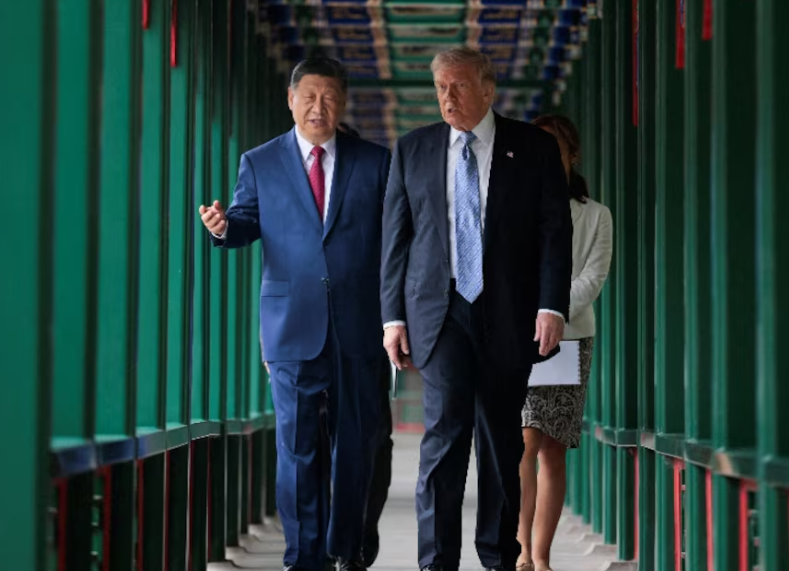
The summit featured grand displays of diplomacy, including military ceremonies, cultural tours, and high-level banquets. Trump repeatedly praised Xi’s leadership and hospitality during the visit, describing the meetings as incredible and saying that a lot of good has come of it. The leaders held their final discussions at the Zhongnanhai leadership compound in Beijing, where they shared a formal lunch and discussed bilateral relations and international concerns.
Behind the scenes, however, serious strategic tensions remained unresolved. Chinese officials reportedly warned the United States against any actions involving Taiwan that could increase regional instability. Taiwan continues to be one of Beijing’s most sensitive geopolitical concerns, and Xi is said to have cautioned Trump that mishandling the issue could lead to serious conflict.
Trade discussions also failed to deliver major breakthroughs. Trump had hoped to secure immediate economic victories, including aircraft deals involving Boeing, but no major announcements emerged from the summit. Instead, Xi focused on promoting long-term stability in U.S.-China trade relations and reducing tensions between the two global powers.
The ongoing conflict involving Iran also dominated discussions. Before Friday’s talks, China’s foreign ministry released a statement criticizing the war and calling for peace negotiations. The ministry stated that the conflict should never have happened and emphasized the importance of restoring global economic stability, particularly in energy markets affected by disruptions in the Strait of Hormuz.
Trump later stated that both leaders shared similar views regarding Iran, though Chinese officials stopped short of offering specific commitments. The United States had reportedly hoped China would use its influence over Iran to encourage a diplomatic settlement. However, experts believe Beijing is unlikely to pressure Tehran aggressively because Iran remains an important strategic partner for China in balancing U.S. influence globally.
Foreign policy analysts observed that while both nations expressed support for stability and open trade routes, the summit lacked concrete agreements on Iran or broader geopolitical cooperation.