


BENGALURU
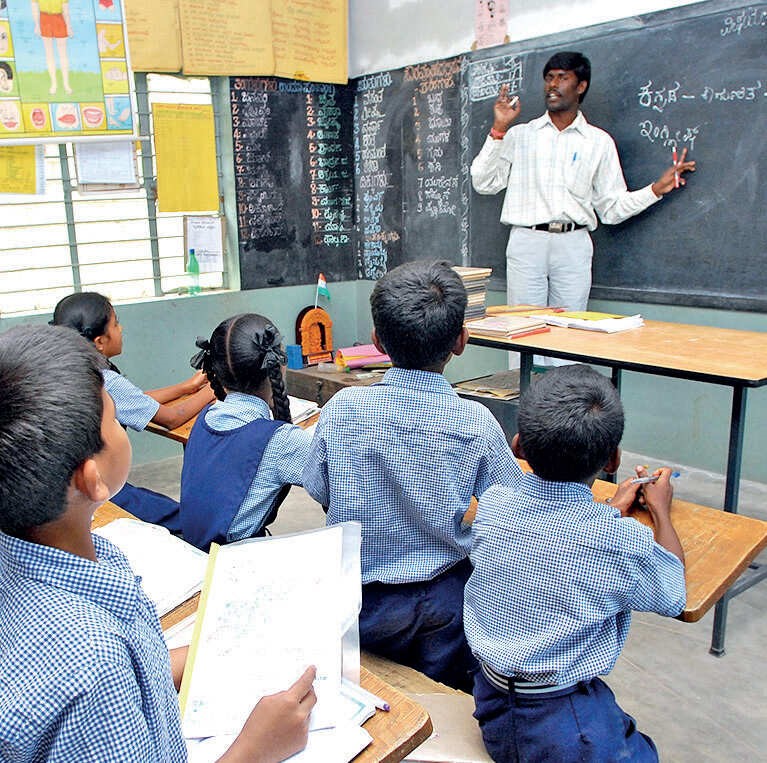
Karnataka is facing a major shortage of teachers in government schools, with nearly 22 percent of sanctioned posts lying vacant, according to a recent report by NITI Aayog.
The report, based on Project Approval Board meetings conducted in 2025, revealed that against the sanctioned strength of 1,78,935 teachers for 41,088 government primary schools across the state, there is a shortfall of 38,163 teachers.
According to the findings, nearly 77 percent of the vacancies are concentrated in primary and upper primary schools. Of the total shortage, 29,473 posts remain vacant at the elementary level, while 8,690 vacancies exist at the secondary level.
Though Karnataka’s overall shortage is lower compared to states such as Bihar, Jharkhand, Madhya Pradesh and West Bengal, the report stressed the need for immediate policy interventions to strengthen school education systems.
The report noted that states such as Kerala and Delhi reported no teacher vacancies, while Telangana and Chhattisgarh did not specify staffing figures.
The Karnataka government had earlier announced plans to recruit 15,000 teachers, but the recruitment process is yet to begin.
Commissioner for School Education Vikas Kishor Suralkar said the process was delayed due to cabinet decisions regarding internal reservation policies.
“After incorporating the revised reservation framework and receiving clearance from the finance department, notifications will be issued. We hope to complete recruitment within 100 days and fill vacancies during the latter part of the academic year,” he said.
Educationists, however, expressed concern over the delay and questioned the government’s commitment to improving public education.
Maya Menon, founder-director of The Teacher Foundation, said teacher development and school quality have not received adequate attention in recent years.
“Committed and competent teachers are essential for improving schools. Professional development of teachers has taken a backseat. Exam scores alone do not reflect what children actually learn,” she said.
Former Institute for Social and Economic Change faculty member AS Seetharamu attributed the problem partly to increasing dependence on guest and contract teachers under programmes such as Samagra Shiksha Abhiyan.
He said low investment in quality schooling and flexible temporary appointments have contributed to long-pending vacancies despite a large number of qualified candidates waiting for government teaching jobs across Karnataka.