


BENGALURU
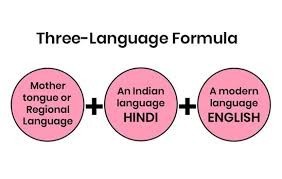
The Kannada Development Authority has recommended dropping the three-language formula in schools and adopting a bilingual approach to arrest rising failure rates in Kannada in SSLC examinations.
In a report titled “Why do Karnataka children fail in Kannada”, recently submitted to the Department of School Education and Literacy, the authority noted a steady increase in failures over the past decade. The percentage of students failing in Kannada as a first language rose from 9.6 in 2016 to 12.9 in 2025. For Kannada as a second language, failures increased by 3.3 percent to reach 11.7 percent, while pass percentages in Kannada as a third language saw a marginal dip.
The report highlights shifting student preferences, with those opting for Kannada as a third language dropping sharply by 68 percent over ten years. At the same time, the number choosing Kannada as a second language rose by 40 percent. There has also been a slight decline in students selecting Kannada as their first language, while those choosing English in that category have increased notably.
Calling the trend a “paradox”, the report observes that Kannada as a first language is performing worse than non-native languages, pointing to deeper issues in pedagogy, curriculum design and assessment methods. It stresses the need for urgent reforms to make language learning more effective and engaging.
Prepared by a team led by educationist V.P. Niranjanaradhya along with Kannada teachers across the state, the report also found disparities across social groups and regions. Students from Scheduled Castes, Scheduled Tribes and Category 2B communities recorded higher failure rates, while coastal and Malnad districts outperformed parts of north Karnataka.
To address these concerns, the authority has suggested revamping textbooks to focus on language development rather than rote learning. It recommends incorporating simple stories, poetry, dialogues and creative expression, supported by visually engaging materials in classrooms.
The report further emphasises prioritising language skills in assessments and strengthening foundational learning from the primary level. It also proposes incentives such as scholarships, educational priority and government job preferences for students excelling in Kannada, aiming to restore interest and improve outcomes in the language.