


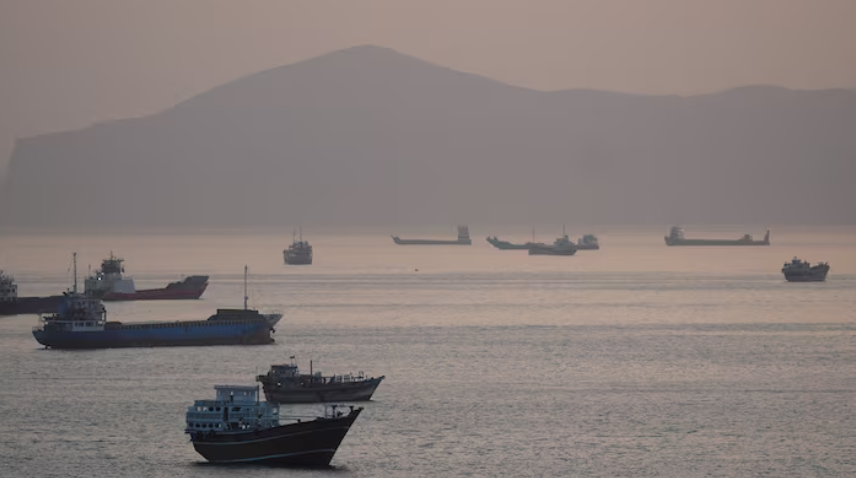
A senior United Arab Emirates official has voiced strong doubts about Iran’s credibility in managing the Strait of Hormuz, highlighting growing mistrust amid a prolonged conflict that continues to disrupt global energy supplies and diplomatic efforts.
Washington
Concerns over stability in the strategically vital Strait of Hormuz intensified on Friday after a top United Arab Emirates official warned that Tehran could not be trusted to handle any unilateral arrangements in the region. The remarks come as efforts to resolve the ongoing conflict involving Iran remain stalled, despite a temporary ceasefire that has done little to ease tensions.
Two months into the war, the crucial maritime corridor remains largely closed due to an Iranian blockade, while the United States Navy continues to restrict Iranian oil exports. The disruption has severely impacted global markets, cutting off nearly 20 percent of the world’s oil and gas supply. As a result, international energy prices have surged, raising fears of a broader economic slowdown.
Although a ceasefire was implemented on April 8, uncertainty persists. Reports that Donald Trump could approve new military strikes to pressure Iran into negotiations pushed oil prices to a four-year high earlier this week. Iranian officials, however, have signaled readiness for escalation, activating air defense systems and preparing for a potential short but intense military confrontation. Sources indicate that any U.S. strike could be followed by action from Israel.
The conflict has already seen significant military exchanges. Following joint airstrikes by the United States and Israel in late February, Iran retaliated by targeting U.S. bases and associated infrastructure across Gulf states. Meanwhile, Hezbollah launched missile attacks against Israel, prompting further retaliatory strikes on Lebanese territory.
Amid rising tensions, UAE presidential adviser Anwar Gargash emphasized that international law and collective global efforts must ensure safe navigation through the strait. He warned that Iran’s previous actions against neighboring countries undermine any confidence in its commitments.
Diplomatic efforts have also hit a roadblock. While Pakistan has attempted to mediate, no new talks have been scheduled. Thousands have reportedly died in the conflict, primarily in Iran and Lebanon.
Adding to the uncertainty, President Trump faces a deadline under the War Powers Resolution to either conclude the conflict or justify its continuation before Congress. However, officials suggest the deadline may pass without significant developments, as the administration argues that hostilities effectively ended with the April ceasefire; despite ongoing instability in the region.