


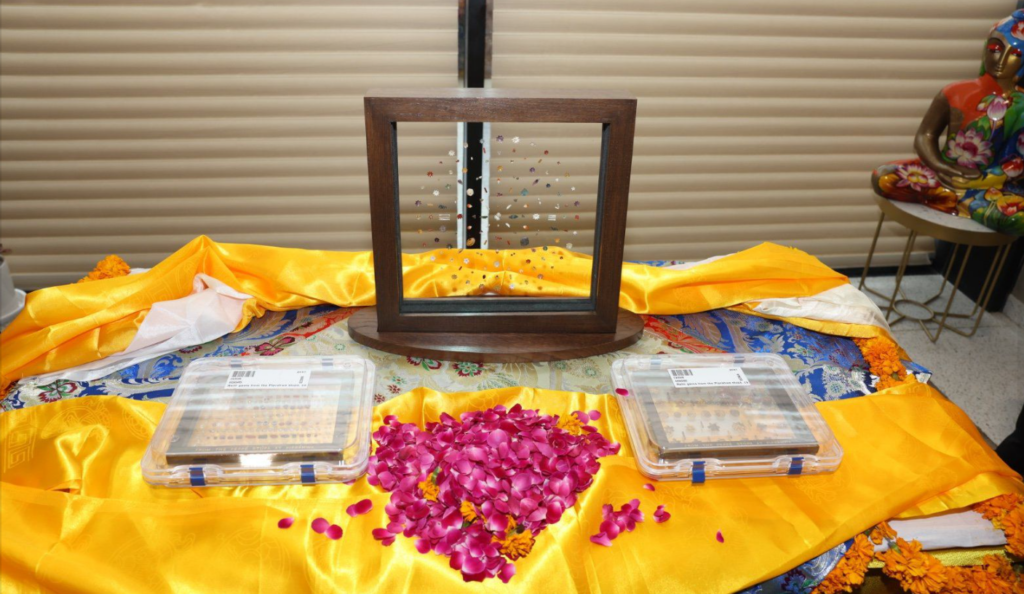
Ladakh will host the sacred Piprahwa relics this May, a historic milestone aimed at strengthening the region’s cultural identity.
LEH
Ladakh is preparing for a historic civilizational milestone this May as it welcomes the sacred Piprahwa relics for a public exposition.
These holy remains of the Buddha, linked to the Shakya lineage, will be widely accessible in the region for the first time. Experts believe this event will act as a symbolic anchor, helping Ladakh preserve its unique social fabric amidst rapid modernization.
The arrival of the relics is expected to do more than just offer a moment of prayer. It is set to bring together villages, youth groups, and monasteries, fostering a deep sense of community unity. In a region where tourism and global influences are changing traditional life, this shared spiritual experience offers a way for older generations to pass down cultural values to the youth. National Buddhist leaders from across India are expected to converge in Leh, turning the high-altitude desert into a vibrant hub of dialogue and peace.
Beyond spirituality, the exposition promises a significant boost to the local economy. Religious tourism often creates a surge in demand for local guides, artisans, and hospitality workers. It also provides a global stage for traditional Ladakhi crafts, such as thangka painting and handwoven textiles. Improvements in infrastructure made for the event will leave a lasting benefit for residents long after the pilgrims return home.
Ultimately, the event positions Ladakh as a central node in global Buddhism. By hosting these revered relics, India reinforces its cultural ties with nations like Japan, Thailand, and South Korea, proving that ancient traditions remain a powerful force for modern diplomacy and social resilience.