


Health hazard
BENGALURU
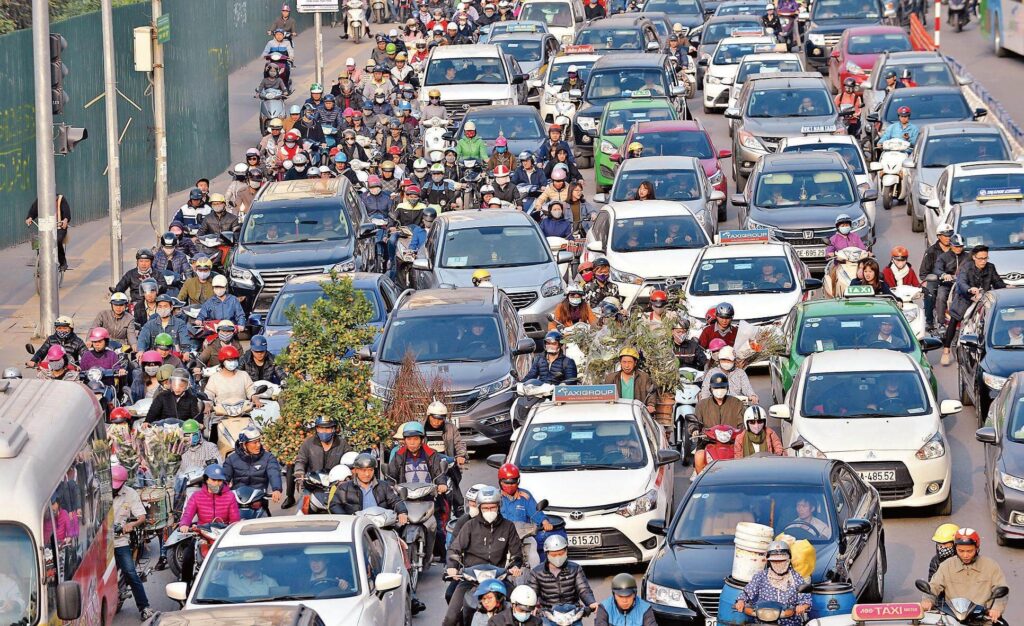
Bengaluru’s worsening traffic congestion is no longer just an inconvenience for commuters but is increasingly becoming a serious public health concern, with doctors warning that prolonged exposure to traffic noise is contributing to rising hearing-related disorders among residents.
Medical experts say constant exposure to noise levels ranging from 70 to 100 decibels (dB) on the city’s roads is affecting people across age groups, particularly those spending long hours in traffic or living near busy roads and junctions.
According to doctors, Bengaluru’s traffic noise frequently exceeds safe limits, with several residential and commercial areas regularly recording noise levels above 60-70 dB, while major traffic corridors witness even higher levels during peak hours.
Dr Jyotirmay S Hegde, Head of Department and Lead Consultant, ENT, Aster Whitefield Hospital, said sustained exposure to sound levels above 70 dB significantly increases the risk of hearing impairment.
“The concern is not just occasional exposure but the continuous nature of the noise. People are exposed during commuting, through constant honking, and even while staying near busy roads. Studies indicate that the risk of tinnitus rises with every 10 dB increase in traffic noise,” he explained.
Doctors say the symptoms often develop gradually, making early diagnosis difficult. Tinnitus, a persistent ringing sensation in the ears, is usually the first warning sign. This may later progress to difficulty understanding speech in noisy surroundings, muffled hearing and a blocked-ear sensation.
If left unchecked, the condition can develop into mild or moderate sensorineural hearing loss.
Apart from hearing-related complications, specialists are also observing a rise in non-auditory symptoms linked to excessive noise exposure, including headaches, irritability, sleep disturbances, reduced concentration, ear discomfort and increased sensitivity to sound.
Adding to the concern is the growing use of earphones and headphones during daily commutes.
Dr Shantanu Tandon, Senior Consultant, ENT, Sakra World Hospital, said many commuters tend to raise the volume of their devices to drown out surrounding traffic noise.
“Over time, this permanently damages delicate hair cells in the inner ear, leading to tinnitus, reduced hearing clarity and early hearing loss. Young adults are particularly vulnerable,” he said.
Dr K Jisha, Consultant-ENT at Kauvery Hospital, Marathahalli, pointed out that despite regulations governing honking and permissible noise levels, enforcement remains weak.
She noted that the city’s dense traffic conditions and rampant honking culture continue to worsen the problem, even affecting silence zones near hospitals and schools.
Doctors caution that unless stricter enforcement and greater public awareness are prioritised, unchecked traffic noise could steadily erode Bengaluru’s hearing health and overall well-being.