


Panchayati Raj Legacy
New Delhi
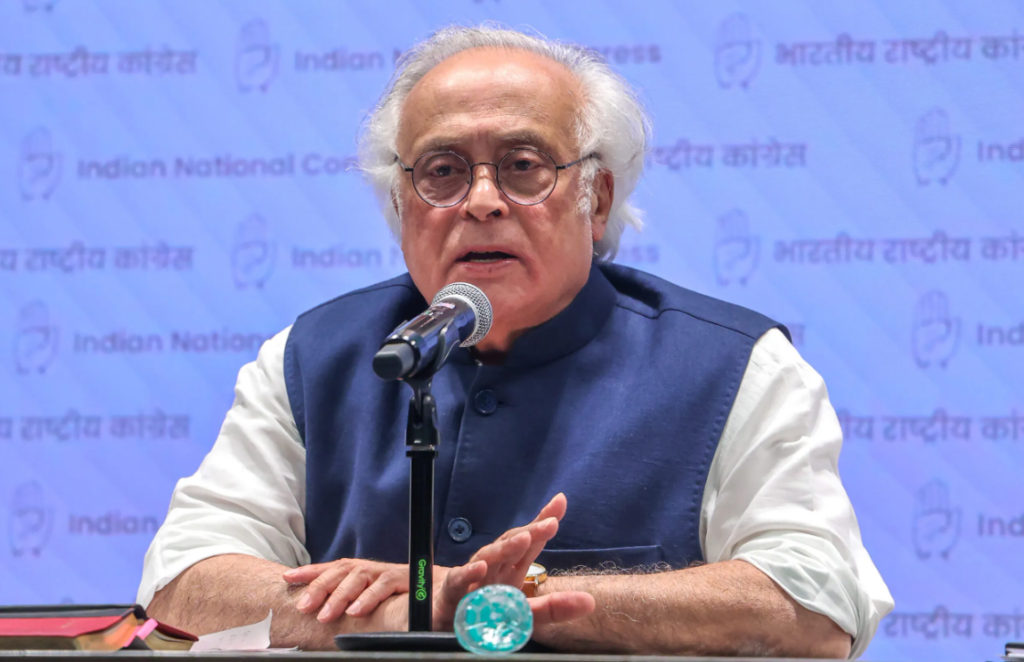
The Congress party on Friday commemorated National Panchayati Raj Day by revisiting key legislative milestones that strengthened grassroots democracy in India. Senior party leader and Member of Parliament Jairam Ramesh credited former Prime Ministers Rajiv Gandhi and Manmohan Singh for their pivotal contributions in empowering village-level governance through constitutional and policy reforms.
Speaking on the occasion, Jairam Ramesh emphasized the historic importance of the 73rd Constitutional Amendment, which came into effect in 1993. He attributed the landmark reform entirely to the vision and determination of Rajiv Gandhi, noting that the amendment fundamentally transformed local self-governance in rural India. According to Ramesh, it was Gandhi’s persistence that ensured the inclusion of a provision reserving one-third of seats in Panchayati Raj institutions for women, including those from Scheduled Caste and Scheduled Tribe communities.
He pointed out that this move has had a lasting impact, with nearly 32 lakh elected representatives currently serving in Panchayati Raj institutions across the country, of whom around 15 lakh are women. Ramesh also recalled that the original version of the amendment had been introduced in 1989 but failed to pass in the Rajya Sabha due to opposition from the Bharatiya Janata Party.
Highlighting further developments, Ramesh praised the tenure of Manmohan Singh for institutionalizing and strengthening the Panchayati Raj framework. He noted that the Ministry of Panchayati Raj was established in May 2004 under Singh’s leadership, marking a significant step toward decentralization. Additionally, he cited the launch of the Mahatma Gandhi National Rural Employment Guarantee Act (MGNREGA) in 2006 as a transformative policy that placed village councils at the center of planning and implementation of rural employment schemes.
Ramesh explained that the 73rd Amendment introduced a comprehensive set of provisions under Articles 243-A to 243-O of the Constitution, granting extensive powers to local governing bodies. These provisions laid the foundation for a robust system of grassroots democracy.
Providing current figures, he stated that India now has approximately 2.6 lakh gram panchayats, over 6,700 intermediate panchayats, and 673 district-level bodies. In a subtle political remark, Ramesh stressed that strengthening local governance institutions remains more urgent than merely expanding the size of the national legislature, underscoring the enduring relevance of Panchayati Raj in India’s democratic framework.