


Koppal
A recent study has revealed evidence that iron ore was refined and processed in Koppal district nearly 3,000 years ago, shedding new light on the region’s ancient industrial and cultural history.
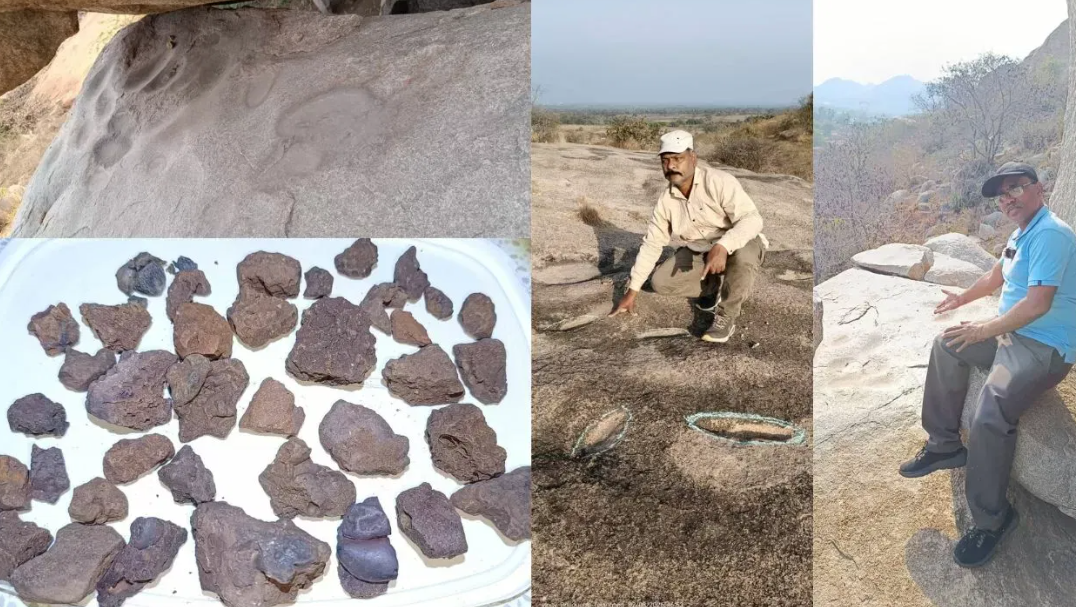
The research, conducted by historian Dr. Sharanabasappa Kolkar from Gangavati, points to significant findings near Hirebenkal Morer Plate in Gangavati taluk. According to the study, remnants of ancient furnaces and other materials indicate that iron ore refining activities were carried out in the area during the Iron Age.
Experts involved in the research have identified multiple traces of early iron production across Koppal district, suggesting that the region played an important role in early metallurgical practices. The discovery of furnaces in particular has provided strong evidence that iron ore was not only available but also systematically processed using established techniques.
Interestingly, the findings suggest that iron ore may have been transported from the Sandur region to these processing sites in Koppal. This indicates the existence of organized resource movement and possibly trade or logistical networks during that period. The presence of such systems highlights the advanced nature of ancient communities in the region.
The study also points to the likelihood that the refined iron was used to produce tools and weapons, further emphasizing the technological capabilities of the time. The discovery of lower-grade or secondary ore materials in the area has added further credibility to the research, indicating that even different types of ore were utilized efficiently.
Historians believe that these findings contribute significantly to understanding the early development of metallurgy in South India. The evidence not only showcases the technical knowledge of ancient civilizations but also underscores Koppal’s historical importance as a center for early industrial activity.
The research has opened new avenues for archaeological exploration in the region, with experts calling for further excavation and preservation efforts. If studied in greater detail, these findings could offer deeper insights into the lifestyle, economy, and technological advancements of people who lived thousands of years ago.