

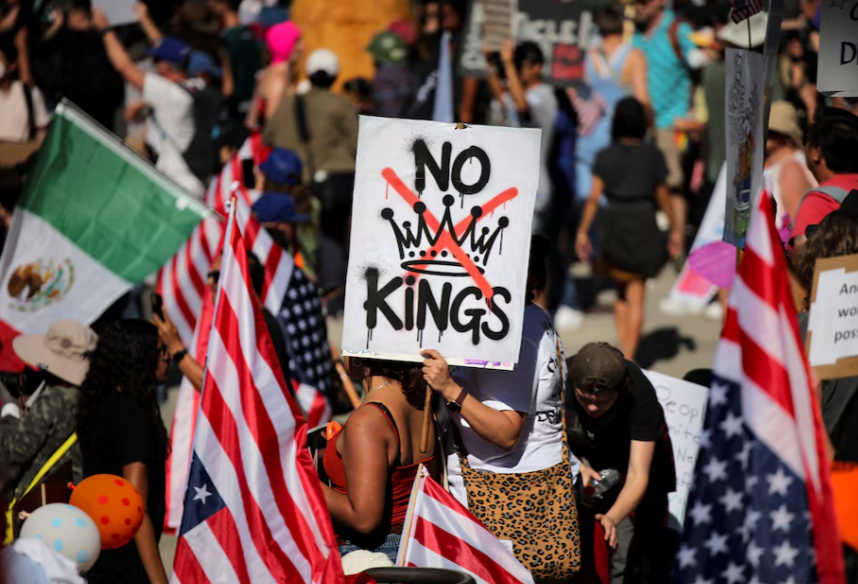
Los Angeles
Thousands of rallies are set to take place across the United States on Saturday as part of the growing No Kings protest movement opposing the policies of Donald Trump and his administration.
Organizers say more than 3,200 events are scheduled across all 50 states, making it one of the largest coordinated protest efforts in recent U.S. history. The demonstrations are expected to surpass previous No Kings mobilizations, which drew millions of participants nationwide. Activists are aiming to make this the largest single-day nonviolent protest ever held in the country.
The movement is being spearheaded by Indivisible, a grassroots organization that launched the No Kings campaign last year. Co-founder Leah Greenberg emphasized that the significance of the protests lies not only in their scale but also in their geographic spread. She noted that demonstrations are taking place in regions that have traditionally seen limited political activism, reflecting a widening base of opposition.
Organizers report a surge in participation, particularly in deeply Republican states such as Idaho, Wyoming, Montana, and Utah. This expansion into conservative strongholds signals a shift in political engagement, with more residents becoming active in organizing and attending protests.
In addition to rural and traditionally conservative areas, suburban regions that often play a decisive role in national elections are witnessing a sharp rise in interest. Areas such as Bucks and Delaware counties in Pennsylvania, East Cobb and Forsyth in Georgia, and Scottsdale and Chandler in Arizona are expected to see large turnouts. These regions have historically been key battlegrounds in determining electoral outcomes.
The protests come at a politically sensitive time, with midterm elections approaching later this year. Organizers believe the growing momentum behind the No Kings movement could translate into increased voter participation and influence the balance of power in Congress.
As demonstrations unfold nationwide, the scale and reach of the protests highlight intensifying political divisions and growing civic engagement, setting the stage for a highly contested election season.