


Puttur:
A political programme reportedly organised in the premises of a temple in Puttur has sparked protests from several Hindu organisations, which alleged that religious spaces should not be used for political activities.
According to local sources, the event linked to the Indian National Congress was held recently within the temple premises as part of a local outreach initiative. The programme drew objections from members of Hindu groups who said such venues must remain free from political gatherings.
Leaders of the protesting organisations stated that temples are sacred places dedicated to worship and community rituals and should not be used for party meetings or political campaigns. They demanded that the temple management and authorities ensure that such incidents do not occur again.
Some local residents also expressed concern that mixing politics with religious institutions could create unnecessary tensions in the community.
Meanwhile, those associated with the programme said the event was intended as a community interaction and was not meant to hurt religious sentiments.
The issue has led to discussions in the locality, with differing views among residents over whether temple premises can be used for social or political gatherings.
Police sources said the situation in Puttur remains peaceful and that authorities are keeping a close watch to prevent any escalation.
Visarjane’ Drive to Ensure Dignified Disposal of Religious Items in Mangaluru
Mangaluru:
The Ramakrishna Mission in Mangaluru will organise a special campaign titled “Visarjane” from March 16 to 26 to facilitate the respectful disposal of damaged or discarded religious items.
The initiative is part of the ongoing Swachh Mangaluru campaign launched by the mission in 2015 to promote cleanliness in the city and create awareness about responsible waste management among citizens.
Under the campaign, volunteers have been conducting several programmes such as cleanliness drives, door-to-door awareness on waste segregation, ‘Swachh Manas’ classes for schoolchildren and ‘Swachh Soch’ seminars for college students, apart from special waste collection drives.
During a recent cleanliness drive near the Kadri Manjunath Temple area, volunteers noticed that old pictures of deities, broken idols and other religious articles had been discarded in public spaces. The discovery highlighted the need for a proper system to ensure the respectful handling and disposal of such sacred objects.
To address this issue, the mission, in association with the Swachh Mangaluru Pratishtana, has planned the Visarjane campaign by setting up temporary collection centres at six locations across the city.
The centres will be established at Mangaladevi Temple, Kadri Manjunath Temple, Bharath Mall at Bejai, Forum Fiza Mall at Pandeshwar, City Centre Mall and Govindadasa College in Surathkal.
Items collected during the drive will be taken to the Kadri temple where a traditional ritual will be performed before they are processed for recycling or disposed of in an environmentally responsible manner.
The campaign will be formally inaugurated at Amrita Bhavan in the Ramakrishna Mission premises in Mangaluru at noon on March 16.
Swami Nityasthananda, president of Ramakrishna Math Basavanagudi, and Swami Jitakamananda, president of Ramakrishna Math Mangaluru, will be present along with volunteers of the Swachh Mangaluru campaign.
Scholar Vaman Nandavar Set Model for Ethnographic Studies in Karnataka: Chalapathi
Mangaluru:
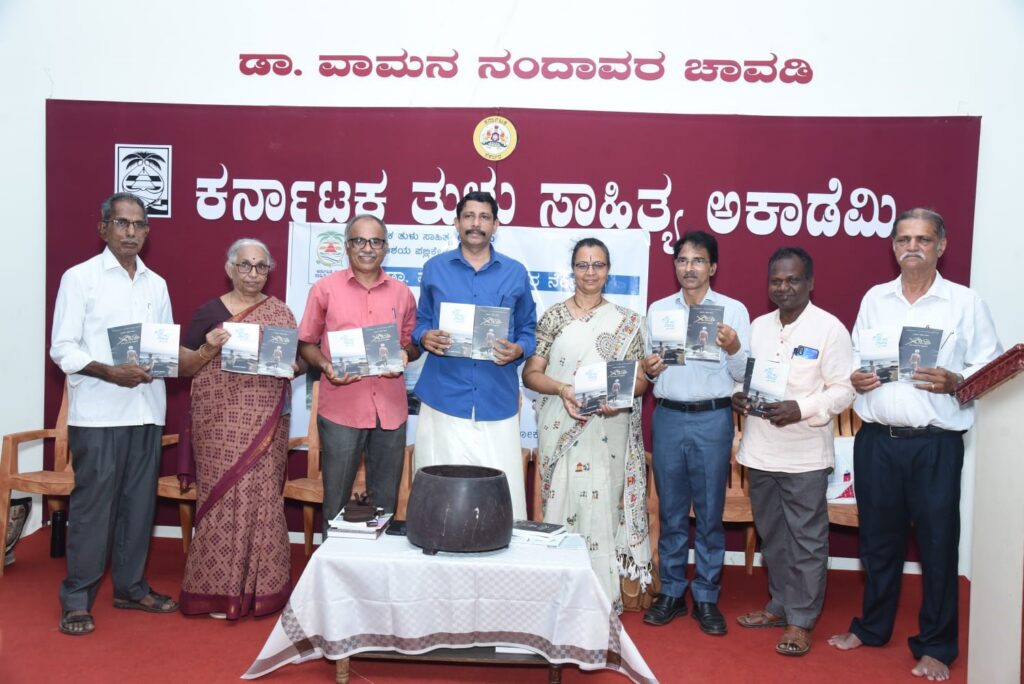
Folklore researcher Dr. Vaman Nandavar’s independent studies not only documented the folk and ethnographic traditions of the coastal region but also set a model for conducting ethnographic research across Karnataka, said scholar Dr. Chalapathi.
He was speaking at a memorial programme for the noted folklorist and former chairman of the Karnataka Tulu Sahitya Academy, Dr. Vaman Nandavar, held at the Tulu Academy on Saturday.
The event was organised jointly by the Karnataka Tulu Sahitya Academy and Akruti Ashaya Publications. During the programme, Chalapathi released the book Aadima, a compilation of Nandavar’s studies on communities and ethnic groups edited by Chandrakala Nandavar.
Dr. Chalapathi, a researcher at the Central Institute of Classical Tamil, said that Nandavar had taken up field-based folklore research during the 1980s when academic studies in folklore were just gaining momentum. His method of documenting communities and traditions became a distinctive approach within the field of folklore research, he said.
Presiding over the programme, Taranath Gatti Kapikad, president of the academy, formally released the publication. He said Nandavar was not only a dedicated researcher of the Tulu language and culture but also an active organiser and leader who worked for the promotion of Tulu.
Retired principal and director of Uchila Kala Gangotri, Sadashiva, unveiled the name plaque of the ‘Vaman Nandavar Chavadi’ at the academy premises.
Poet Jyothi Mahadeva introduced Nandavar’s literary work Taalamela and said the author had experimented with distinctive linguistic expressions in his poetry.
During the programme, classical musician Ratnavathi Baikadi was honoured for her contributions to music.
Tulu Sahitya Academy member secretary Babu Pangal was present on the occasion. Former academy member Bennett Ammanna compered the programme, while Akruti Ashaya publisher Kallur Nagesh welcomed the gathering and delivered the introductory remarks.
Chandrakala Nandavar proposed the vote of thanks.