


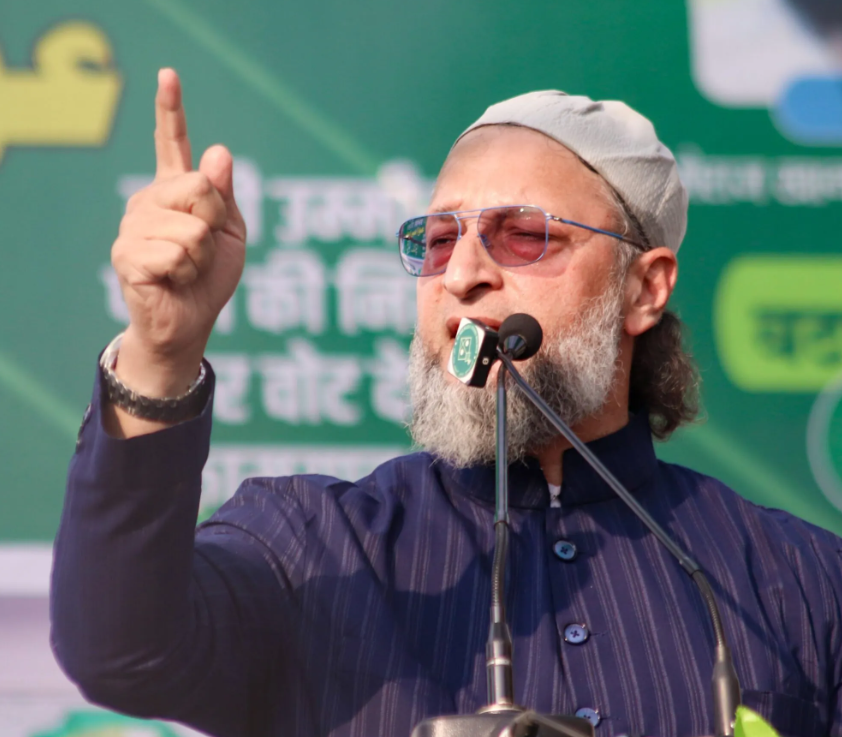
Intro: He urged the Indian government to play a constructive role in de-escalating tensions.
Hyderabad
Asaduddin Owaisi, President of the All India Majlis-e-Ittehadul Muslimeen (AIMIM), on Sunday termed the assassination of Iran’s Supreme Leader Ayatollah Ali Khamenei as an immoral and unlawful act, strongly condemning the reported attacks on Iran by the United States and Israel.
The Hyderabad MP, speaking on behalf of his party, offered condolences to the Shia community, which regards Khamenei as its spiritual leader. He described the strikes as absolutely condemnable, particularly at a time when Iran-US talks were reportedly underway in Geneva.
Referring to US President Donald Trump and Israeli Prime Minister Benjamin Netanyahu, Owaisi alleged that the two leaders had jointly attacked Iran without regard for the holy month of Ramzan. They did not even care that it’s the holy month of Ramzan. Anyway, Benjamin Netanyahu does not even believe in humanity, Owaisi told the media.
The AIMIM leader claimed that if a diplomatic breakthrough had been achieved in Geneva, Iran might have agreed not to use any nuclear stockpiles it possessed. He further stated that more than 200 people had reportedly been killed in the attacks, including 108 girls who lost their lives when strikes allegedly hit a girls’ school.
Demanding an immediate halt to hostilities, Owaisi warned that continued military action would destabilise the entire region. These attacks on Iran should stop at the earliest, otherwise the whole region will be embroiled in instability, he said.
He also urged India to play a proactive role in de-escalating the situation. Expressing hope that the present BJP-led government would condemn the assassination, he emphasised that nearly 10 million Indians work in Gulf countries and could be affected by prolonged conflict.
Owaisi further claimed that Indian workers were reportedly injured at Oman port and that several Indian pilgrims who had travelled for ‘Umra’ were stranded after flights were cancelled and funds exhausted.
Calling it an illegal war, he maintained that there was no immediate threat warranting such action and cautioned that failure to end the conflict could plunge the region into widespread turmoil.