


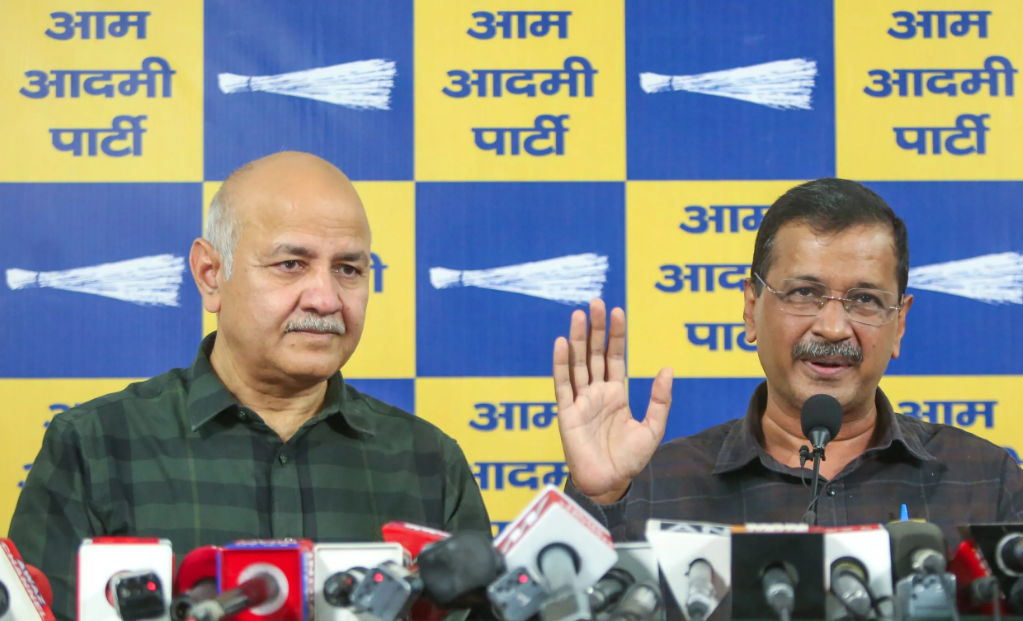
Blurb: CBI challenges trial court order discharging Arvind Kejriwal, Manish Sisodia and others
New Delhi
The Delhi High Court is scheduled to hear next week a plea filed by the Central Bureau of Investigation (CBI) challenging a trial court order that discharged AAP national convenor Arvind Kejriwal, former Deputy Chief Minister Manish Sisodia and 21 others in the 2022 Delhi excise policy case.
According to the causelist available on the High Court’s official website, the matter is listed before a single-judge Bench of Justice Swarnakanta Sharma on March 9. The CBI has filed a criminal revision petition contesting the detailed order passed by the Rouse Avenue Court, which had declined to frame charges against all 23 accused and held that the prosecution failed to establish even a prima facie case warranting trial.
On February 27, Special Judge (PC Act) Jitendra Singh, in an order spanning more than 1,100 paragraphs, concluded that the case presented by the CBI was wholly unable to survive judicial scrutiny and stood discredited in its entirety. After examining extensive records and the depositions of nearly 300 prosecution witnesses, the trial court observed that no material had surfaced to raise even a grave suspicion against the accused.
The court further held that compelling the accused to undergo a full-fledged trial in the absence of legally admissible evidence would amount to a manifest miscarriage of justice and an abuse of the criminal process.
The case relates to the Delhi Excise Policy 2021–22 introduced by the then AAP-led government, which was subsequently scrapped amid allegations of corruption and kickbacks. The CBI alleged that the policy was designed to benefit certain private liquor entities, including the so-called South Group, in exchange for alleged upfront bribes that were purportedly routed for electoral purposes.
The agency also claimed that irregularities in the formulation and implementation of the policy resulted in undue favours to licensees and financial losses to the public exchequer. However, the trial court rejected the prosecution’s theory of an overarching conspiracy, stating that the contemporaneous record indicated the policy emerged from a consultative and deliberative process carried out in accordance with prescribed procedures.