


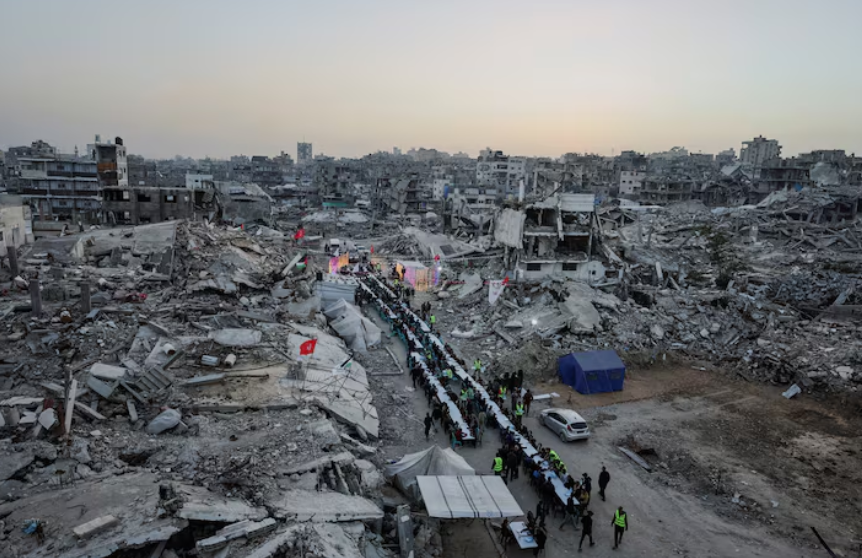
Intro: ‘The scale and pattern of displacement, combined with sustained attacks, have significantly worsened conditions for civilians in the enclave’
Gaza city
A report published on Thursday by the United Nations has accused Israeli forces, Hamas, and other Palestinian armed groups of committing serious violations of international humanitarian law in Gaza, including actions that may amount to atrocity crimes.
The findings, released by the UN human rights office, have intensified international scrutiny of the ongoing conflict and its humanitarian consequences.
According to the report by the Office of the United Nations High Commissioner for Human Rights, intensified Israeli military operations and the forcible transfer of Palestinian civilians appear to be aimed at effecting a permanent demographic change in Gaza. The document warns that such actions raise concerns over what could amount to ethnic cleansing. It emphasizes that the scale and pattern of displacement, combined with sustained attacks, have significantly worsened conditions for civilians in the enclave.
The report also scrutinizes the conduct of Hamas and other Palestinian armed groups. It states that the holding and alleged mistreatment of hostages by Hamas may constitute war crimes under international law. The U.N. human rights office noted that hostage-taking and inhumane treatment are strictly prohibited under the Geneva Conventions and related legal frameworks.
Israel’s permanent mission in Geneva strongly rejected the findings, dismissing the allegations regarding Israel’s conduct. In a statement, the mission said the U.N. human rights office had lost its credibility and accused it of engaging in what it described as a campaign of demonization and disinformation against the State of Israel. Israeli officials have repeatedly defended their military operations as necessary measures to counter militant threats and ensure national security.
Hamas did not immediately respond to requests for comment on the report’s conclusions. The publication of the findings is expected to fuel further diplomatic debate and calls for accountability, as international observers continue to monitor developments in the conflict and its humanitarian impact.