


Washington
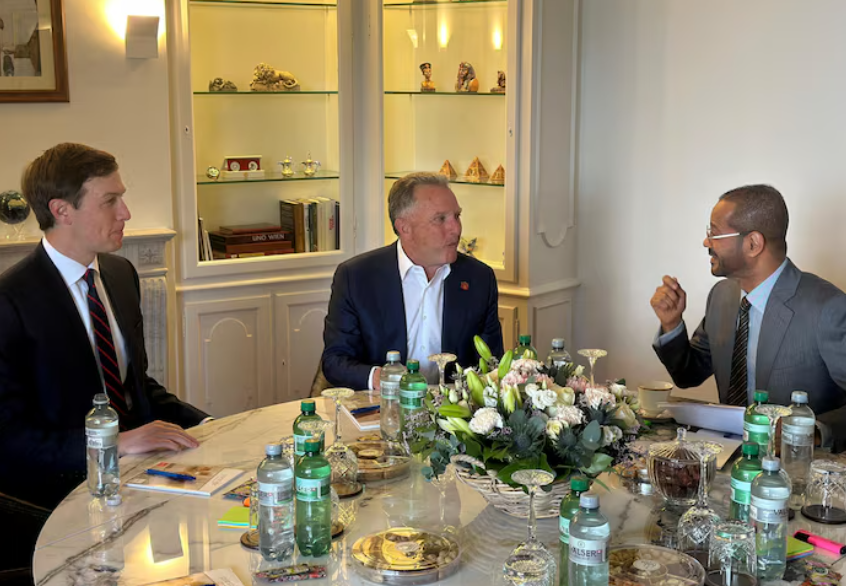
Even for a U.S. president long associated with high-profile deal-making, President Donald Trump’s decision to assign his trusted envoys to handle two complex international negotiations in a single day has raised eyebrows across diplomatic circles. In Geneva, U.S. special envoy Steve Witkoff and Trump’s son-in-law Jared Kushner were tasked with shuttling between discussions on the Iranian nuclear standoff and efforts to advance peace talks related to Russia’s war in Ukraine.
The back-to-back diplomatic engagements have left many foreign policy observers questioning whether the administration’s representatives may be overstretched. Both negotiations are widely regarded as among the most intricate and politically sensitive issues currently facing Washington. The Iranian nuclear file involves delicate questions about sanctions relief, uranium enrichment limits, and international inspections, while the Ukraine conflict centers on territorial sovereignty, security guarantees, and a fragile ceasefire process.
Experts argue that each crisis alone demands sustained focus, technical expertise, and careful coordination with allies. Attempting to manage both simultaneously, particularly within the tight timeframe of a single day, risks diluting attention and reducing the likelihood of tangible progress. Critics suggest that shuttle diplomacy of this scale requires a broader diplomatic infrastructure rather than reliance on a small circle of trusted aides.
Supporters of the administration, however, maintain that consolidating efforts reflects Trump’s belief in streamlined negotiation strategies. They argue that trusted envoys with direct access to the president can move quickly, make decisive offers, and bypass bureaucratic delays.
Still, questions remain about whether the approach can deliver substantive breakthroughs. Diplomats familiar with multilateral negotiations caution that both Tehran and Moscow are seasoned players unlikely to concede ground without prolonged engagement. As the Geneva meetings conclude, analysts are watching closely to see whether the ambitious diplomatic balancing act yields results—or underscores the limits of concentrated deal-making in complex geopolitical crises.