


Blurb:
Secretary highlights evolving geopolitics before key Munich security gathering.
Washington
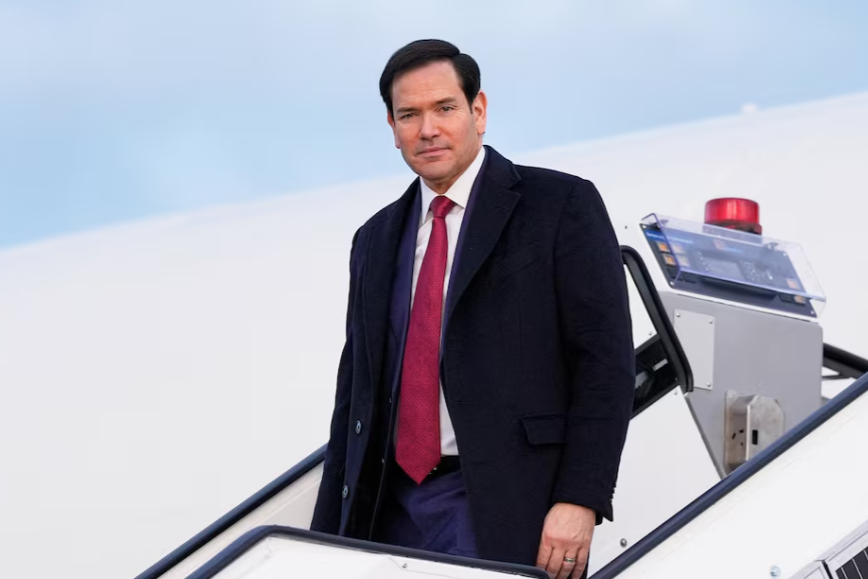
U.S. Secretary of State Marco Rubio has warned that relations between the United States and Europe are at a defining moment as global politics undergo rapid and profound change. Speaking ahead of the annual Munich Security Conference, Rubio acknowledged the uncertainty shaping the transatlantic partnership but adopted a notably warmer and more reassuring tone compared to the tensions seen a year earlier.
At last year’s Munich gathering, U.S. Vice President JD Vance openly criticized European allies, triggering diplomatic confrontations and raising concerns that Washington was prepared to rethink — or even dismantle — parts of the international order it had long championed. The remarks unsettled European leaders, many of whom began reassessing their strategic dependence on the United States.
Since then, Washington’s partners have sought to strike a delicate balance: preserving the foundations of the transatlantic alliance while carving out a more independent course in security, trade, and foreign policy. This recalibration comes amid mounting global pressures, including Russian invasion of Ukraine and significant disruptions in global trade systems that have tested economic resilience on both sides of the Atlantic.
Rubio emphasized that the pace of global change leaves little room for complacency. I think it’s at a defining moment … the world is changing very fast right in front of us, he said before departing for Munich. He acknowledged that the geopolitical landscape of today differs fundamentally from that of previous decades. The Old World is gone, Rubio remarked, suggesting that governments must rethink their roles and responsibilities in a new strategic era.
Despite recognizing these shifts, Rubio reaffirmed the deep-rooted ties binding the United States and Europe. He stressed that the two remain closely interconnected and that their futures will continue to be linked. His comments appear aimed at reassuring allies that, while policy debates may continue, the fundamental partnership remains intact.
Rubio’s appearance also carries political implications at home, as he is viewed as a potential rival to Vance in the 2028 U.S. presidential race. Yet in Munich, the central message was one of dialogue and recalibration — a call for renewed discussions about what the future of the transatlantic alliance should look like in an increasingly complex world.