


Blurb: The CM says the government is collaborating with the Centre on the Tulbul Barrage on Jhelum and a Chenab River water-lifting project for Jammu city, hoping for approvals to start work soon
Jammu
Jammu and Kashmir Chief Minister Omar Abdullah on Tuesday said the union territory government plans to fully utilise the current abeyance of the Indus Water Treaty (IWT) to implement major water infrastructure projects.
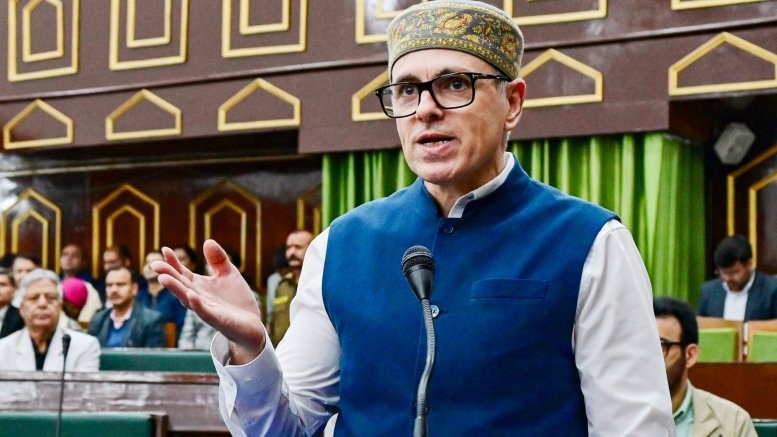
Speaking in the Legislative Assembly, he stressed the need for long-term solutions to Jammu’s water challenges, warning that traditional resources would not meet the city’s future needs over the next 30-50 years.
CM Abdullah recalled that a proposal to supply water to Jammu from the Chenab River, submitted during the previous NC-Congress coalition when Sham Lal Sharma was minister, could not be approved due to IWT constraints. With the treaty currently under abeyance, the government now has the opportunity to revisit that project.
He said the administration is working with the Centre on two major initiatives — the Tulbul Navigation Barrage on the Jhelum River near Sopore and a water-lifting project from the Chenab River in Akhnoor to supply Jammu city. “We are hopeful of receiving approvals soon, after which work will begin,” he added.
Signed in 1960, the IWT allocated the Sutlej, Ravi, and Beas rivers to India, while the Indus, Jhelum, and Chenab were allocated to Pakistan. While India could fully use its rivers, projects on the other three were restricted to run-of-the-river dams with limited hydropower. The suspension of the IWT followed the Pahalgam terror attack in April 2025, giving India an opportunity to unlock the potential of these rivers.
CM Abdullah emphasised that the government aims to implement projects that address both present and future water needs, marking a significant step towards sustainable water management in Jammu and Kashmir.