


Blurb
Neuropsychologists at NIMHANS explore music-based techniques to aid stroke recovery
BENGALURU
When words falter and movement slows after a stroke, rhythm and melody are offering patients a new pathway to recovery. Neuropsychologists at the National Institute of Mental Health and Neurosciences (NIMHANS) are increasingly using music-based interventions as part of evidence-driven neuro-rehabilitation, helping stroke survivors regain lost cognitive, speech and motor functions.
At NIMHANS’ Music Cognition Lab, specialists work with at least 10 stroke patients every month, integrating music into therapy to stimulate damaged neural networks. Dr Shantala Hegde, Professor and Consultant Neuropsychologist at NIMHANS, along with PhD scholars Preeti Kodancha and Shreyas Krishnakumar, has been leading this work for the past few years.
“These are not recreational sessions. We rely on neuroscience-backed, evidence-based tools,” Dr Shantala said. The music used is universal rather than culture-specific, and often very simple — a metronome, rhythmic counting like “1-2-3-4”, structured rhythm patterns, syllables or short phrases. “The goal is to activate intact regions of the brain so they can compensate for areas damaged by stroke,” she explained.
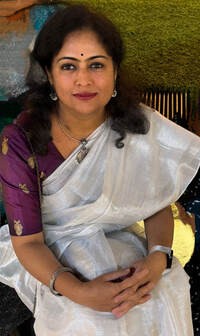
One such beneficiary is VS, a 42-year-old human resources professional from Bengaluru. With a medical history that included systemic lupus erythematosus and congestive heart failure, she suffered a left middle cerebral artery ischaemic stroke at the age of 37. After prolonged hospitalisation, she was unable to walk or speak and showed signs of post-stroke depression.
Nearly three years later, in April 2024, VS approached NIMHANS with persistent communication and cognitive difficulties. Detailed neuropsychological assessments revealed impairments in expressive and written language, verbal fluency, working memory, response inhibition, verbal learning, arithmetic skills and logical sequencing of ideas.
Alongside conventional therapies, psychologists introduced neurologic music therapy techniques to improve engagement and aid recovery. Rhythm-based exercises were used to support speech, motor coordination and higher cognitive functions. Over time, VS showed significant improvement in expressive speech, basic arithmetic, work-related engagement and independence in daily activities.
“Music is one of the highest forms of cognitive function, yet it is often dismissed as merely cultural or recreational,” Dr Shantala noted. “In rehabilitation, it can be a powerful clinical tool.”
Experts at NIMHANS believe such approaches hold promise not only for stroke, but also for other neurological conditions affecting cognition and communication.
“In neuropsychological rehabilitation, I use music very differently. I break it down into its fundamental components and use those building blocks to enhance core cognitive functions such as attention, memory, planning, decision-making and response inhibition,” said Dr Shantala Hegde.