


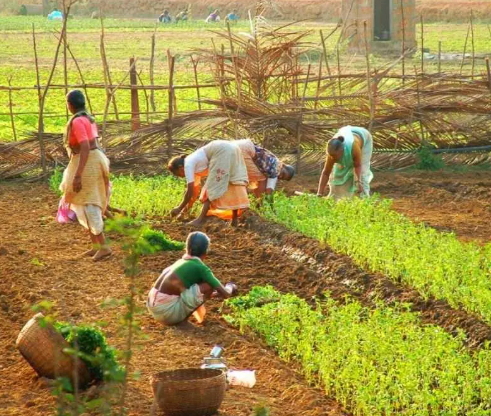
India’s heartbeat has always pulsed strongest in its villages, where millions of farmers wake before dawn to tend the land that feeds a nation of over 1.4 billion people. These custodians of the soil are not merely preserving ancient agricultural traditions they are actively reshaping India’s future through innovation, resilience, and adaptation. As the country races toward becoming a global economic powerhouse, it is the hands that work the earth that will ultimately determine whether this transformation is sustainable, equitable, and truly prosperous.
The story of Indian agriculture is one of remarkable contradictions. While the sector contributes approximately 18 percent to the nation’s GDP, it employs nearly half of India’s workforce. This disparity reveals both a challenge and an opportunity. Farmers today stand at a critical juncture where traditional knowledge meets modern technology, where climate uncertainty demands innovative solutions, and where market dynamics require new business models. How they navigate these crossroads will fundamentally shape India’s trajectory in the coming decades.
Agriculture in India has always been more than an economic activity. It is woven into the cultural fabric of society, embedded in festivals, folklore, and family traditions passed down through generations. The monsoon’s arrival is still celebrated with the same reverence as centuries ago, yet today’s farmers must also consult weather apps and satellite data. This blend of tradition and modernity characterizes the contemporary Indian farmer—someone who respects ancestral wisdom while embracing the tools of the 21st century.
The Green Revolution of the 1960s and 70s transformed India from a food-deficit nation into one capable of feeding its vast population. Led by visionary scientists like M.S. Swaminathan and supported by progressive farmers willing to adopt new high-yielding varieties of wheat and rice, this period demonstrated what Indian agriculture could achieve when innovation met determination. However, the revolution also brought unintended consequences: soil degradation, water depletion, and excessive dependence on chemical inputs. Today’s farmers are tasked with correcting these imbalances while maintaining productivity—a challenge that requires them to be not just cultivators but also environmental stewards and scientists.
Climate change has emerged as perhaps the most significant threat to Indian agriculture, and farmers are responding with remarkable ingenuity. Erratic rainfall patterns, prolonged droughts, unseasonal storms, and shifting growing seasons have made traditional farming calendars unreliable. In response, farmers across the country are experimenting with drought-resistant crop varieties, adopting drip irrigation to conserve water, and implementing crop diversification strategies to spread risk. In Maharashtra, farmers have revived ancient techniques like watershed management, transforming parched land into productive farms. In Punjab, some are shifting from water-intensive paddy cultivation to less thirsty alternatives like maize and vegetables, recognizing that their choices today will determine water availability for future generations.
The technological revolution sweeping across India has not bypassed its farms. Precision agriculture, powered by GPS technology, soil sensors, and drones, is helping farmers optimize input usage and maximize yields. Mobile applications provide real-time information on weather forecasts, market prices, and best agricultural practices. E-commerce platforms are connecting farmers directly to consumers, eliminating intermediaries and improving profit margins. In states like Karnataka and Tamil Nadu, progressive farmers are using smartphone apps to monitor soil health, track crop growth, and even control irrigation systems remotely. This digital transformation is not confined to large commercial farms—even smallholders with fragmented land holdings are discovering that technology can be a great equalizer.
Organic farming represents another frontier where Indian farmers are making significant strides. Sikkim became India’s first fully organic state in 2016, a transformation driven by farmers’ commitment to sustainable practices despite initial yield reductions and market uncertainties. The success of Sikkim has inspired farmers in other states to transition to organic methods, recognizing growing domestic and international demand for chemical-free produce. This shift represents more than a market opportunity—it reflects a philosophical return to farming in harmony with nature, an acknowledgment that soil health and biodiversity are not luxuries but necessities for long-term agricultural sustainability.
Women farmers, who constitute a significant portion of India’s agricultural workforce, are increasingly being recognized as crucial agents of change. Despite performing much of the farm labor—from planting and weeding to harvesting and post-harvest processing—women have historically had limited access to land ownership, credit, and agricultural extension services. This is changing as self-help groups, cooperatives, and targeted government programs empower women farmers with resources, training, and market linkages. Women-led agricultural enterprises are proving particularly successful in areas like dairy farming, horticulture, and value-added food processing. Their involvement brings diverse perspectives to farming decisions and often results in more sustainable and community-oriented agricultural practices.
The challenge of making farming economically viable for small and marginal farmers—who constitute over 86 percent of all farmers in India—remains central to the sector’s future. Land fragmentation, limited access to credit, vulnerability to price fluctuations, and inadequate storage and marketing infrastructure have trapped many farmers in cycles of debt. Forward-thinking farmers are addressing these challenges through collective action. Farmer Producer Organizations (FPOs) are enabling smallholders to aggregate their produce, negotiate better prices, access quality inputs at lower costs, and invest in shared infrastructure like cold storage and processing facilities. These cooperatives represent a reimagining of agricultural economics, where collaboration rather than individual struggle defines the path forward.
Contract farming and direct marketing initiatives are also reshaping farmer-market relationships. Progressive farmers are forming direct partnerships with food processing companies, retail chains, and even restaurants, securing assured markets and often better prices than traditional mandi systems provide. Some are taking entrepreneurship further by establishing their own brands, processing facilities, and direct-to-consumer sales channels. These farmer-entrepreneurs are not just growing crops they are building businesses, creating employment in rural areas, and demonstrating that agriculture can be a profitable and dignified profession.