


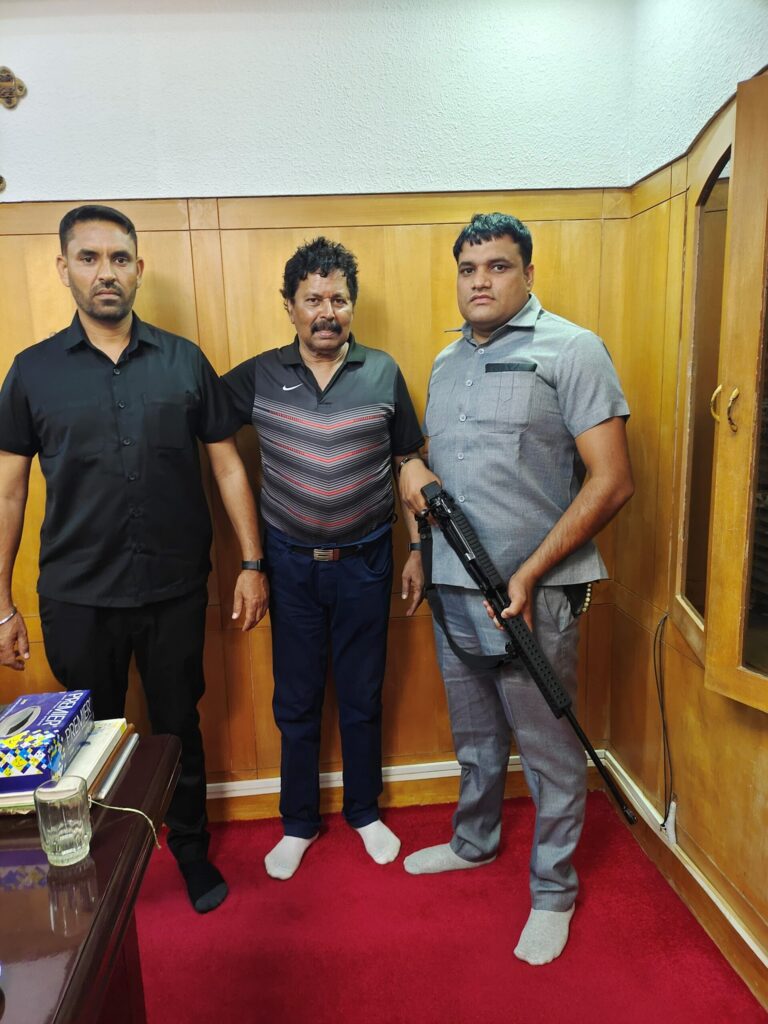
Security in India has long been intertwined with power — whether in the corridors of political influence, the gated enclaves of gated communities, or the bustling tech hub of Bengaluru. The phenomenon of personal protection and “gunmen culture” has evolved from historical norms into a multi-layered modern reality that straddles law, class, politics, and perception. This feature investigates how and why it exists, what laws govern it, how it shapes (and is shaped by) society, and how it manifests locally in Karnataka and Bengaluru.
Origins of Armed Bodyguards in India
From Royal Retainers to Private Security
The concept of protecting individuals with personal guards in India has historical roots in royal courts and feudal systems long before modern policing. Kings and chieftains maintained armed retainers for both ceremonial and defensive purposes, signaling authority and safeguarding against rivals. While modern India abolished princely states, the social memory of armed protection persisted. Even today, certain cultural practices around weapons — such as ceremonial reverence during festivals — reflect traditional associations of arms with defense and heighted status.
In post-independence India, law enforcement duties primarily belonged to formal police and armed forces. However, as urbanization surged and public policing struggled to keep pace with demand, private entities — extending from corporate houses to political figures — began hiring dedicated personal protection officers. In metropolitan cities like Delhi, Mumbai, and Bengaluru, private guards now supplement official capabilities and sometimes substitute for state protection altogether.
- Historical legacy of armed retinues influencing modern norms
- Shift from state monopoly on force to privatized protection
- Cultural attitudes toward personal arms and security
Political Gunmen Culture
Power, Perception, and Politics
Gunmen culture intersects deeply with politics in India. Across states like Uttar Pradesh, Bihar, and Karnataka, political heavyweights and power brokers often cultivate entourages that include armed aides. Politicians seek not just protection but symbolic muscle — a signifier of influence, capacity to intimidate opposition, and secure territory.
In Karnataka, such dynamics surface starkly. In January 2026, three private gunmen were arrested in connection with a politically charged clash in Ballari, leading to accusations of assassination attempts and requests for enhanced police security by a sitting legislator. Such episodes highlight how political actors sometimes operate in a grey zone where private armaments overlap with contention and violence.
Moreover, elected leaders and VIPs in India are provided security by the state based on threat perceptions — categorized as X, Y, Z, and Z+ — which entail armed personnel drawn from police reserves. In Karnataka, over 500 armed guards and gunmen protect VIPs including political figures and corporate leaders, illustrating how official and private protection blur lines of authority and identity.
Bodyguards in Bollywood & Popular Media
From Reel Glamour to Street Perception
The cinema and television industries have significantly shaped popular imagination about bodyguards and gunmen. Indian films often depict personal security officers as hyper-competent, loyal warriors — combining elements of action heroism with class, charisma, and swagger. These portrayals resonate with audiences and reinforce the mystique around armed protection.
Bengaluru, with its vibrant film society culture and youth demographics, is a city where such media images find traction. Films showing bullet-dodging bodyguards or suave protectors at nightclubs influence how aspirants and audiences alike visualize what bodyguards do and represent.
While these portrayals are mostly fictionalized, they contribute to a cultural cachet that sometimes obscures the realities of security work (long hours, low pay, limited training). They also elevate the desirability of being seen with armed protection, not just for safety but for status.