


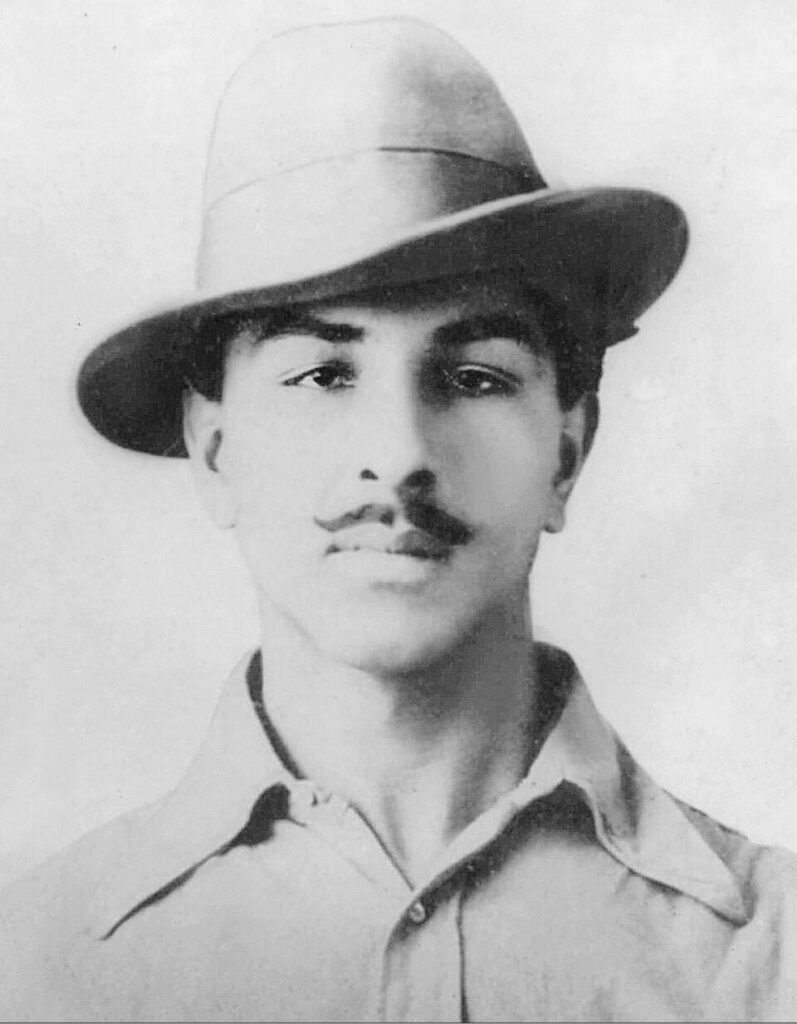
When we speak of youthful courage and revolutionary fervor, no name shines brighter than Bhagat Singh. Born in 1907 into a family already deeply involved in independence activities, Bhagat Singh was destined for greatness from the start. What makes his story particularly poignant is not just his sacrifice but the depth of his intellectual commitment to India’s freedom.
Bhagat Singh was not merely a man of action but also a profound thinker. He read extensively about revolutionary movements worldwide, from the Russian Revolution to the Irish struggle for independence. His writings from jail reveal a mature mind grappling with questions of religion, socialism, and the nature of true freedom. He envisioned an India free not just from British rule but also from the shackles of communalism, casteism, and economic exploitation.
The incident that made him a household name was the 1928 killing of British police officer John Saunders, done to avenge the death of Lala Lajpat Rai during a protest. But it was his bombing of the Central Legislative Assembly in 1929, followed by his deliberate courting of arrest, that truly captured the nation’s imagination. Bhagat Singh wanted a platform, and the courtroom became his stage. He used his trial to expose British tyranny and articulate the vision of a free, socialist India.
On March 23, 1931, Bhagat Singh was hanged along with Rajguru and Sukhdev. He was just twenty-three years old. His last words, “They may kill me, but they cannot kill my ideas,” proved prophetic. His martyrdom ignited a fire in countless young Indians, proving that the spirit of resistance could never be extinguished by the gallows.