


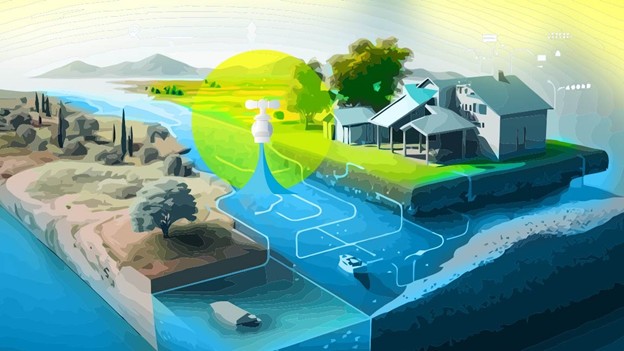
Preventing future contamination crises requires convergence of three elements: technological investment, institutional reform, and community accountability.
Technological foundations must include GIS mapping of all water and sewage networks, real-time water quality monitoring using smart sensors, and transition to 24/7 pressurized supply systems. These investments have proven cost-effective—the smart meters and pressure management systems deployed in Chandigarh’s 24/7 project immediately identify leaks and reduce wastage.
Institutional reform must address chronic understaffing, establish annual maintenance contracts with clear performance standards, and create coordination mechanisms between water, sewage, and health authorities. The CAG audit findings demonstrate that delays in addressing leakages directly cause contamination; yet most cities lack systematic leak management programs.
Community engagement transforms residents from passive consumers into active monitors. The Delhi Janakpuri Residents’ Welfare Association’s independent testing and submission to the National Green Tribunal created the pressure necessary to force action. Empowering residents through transparent water quality reporting and establishing formal grievance mechanisms that demand responsive action creates accountability.
The Human Cost: Why This Matters
Behind every statistic lies human suffering. A six-month-old infant in Indore died from drinking contaminated water. Families in Bengaluru’s KSFC Layout have spent thousands rupees cleaning sumps and purchasing private water while their health deteriorated. Elderly residents in Delhi’s Janakpuri have endured sewage-induced illness in their own homes. The emotional and financial burden extends far beyond hospital bills.
For millions of Indian families, access to safe drinking water remains precarious—not because water is unavailable, but because the systems meant to deliver it have been allowed to deteriorate through negligence and deferred maintenance. In Pune, some societies pay more for tanker water annually than the municipal water tax they pay to the corporation—a perverse redistribution of resources that defies the logic of public health.
Conclusion: Breaking the Cycle
India stands at a critical juncture. The contamination crises of January 2026—spanning Bengaluru, Indore, Gandhinagar, and Delhi—are not isolated anomalies. They are harbingers of what awaits cities without urgent action. AMRUT 2.0’s ₹2,77,000-crore investment provides the financial capacity to transform urban water systems. What remains uncertain is whether political will, institutional capacity, and coordinated governance can match this ambition.
The solution is neither mysterious nor undiscovered. Cities implementing 24/7 pressurized systems with GIS mapping and real-time monitoring have eliminated the vast majority of contamination incidents. The question is not “how” but “when.” Every month of delay means more contaminated water flowing through pipes. Every quarter of inaction means another family experiencing waterborne illness. Every year of bureaucratic lethargy means another generation scarred by preventable disease.
Geeta and her family in Bengaluru now await the installation of a new water pipeline. The residents of Indore grieve loved ones who died from contamination that should never have occurred. Gandhinagar’s families face ongoing typhoid cases from a newly built system that failed through poor engineering coordination. These crises were not inevitable. They were chosen—through years of deferred maintenance, chronic underfunding, and negligent governance.
The question now is whether India’s cities will choose differently. Whether the contamination crisis of 2026 becomes the catalyst for systemic transformation or merely another tragedy absorbed into the statistics of urban dysfunction. The lives waiting to drink safe water from their taps depend on the answer.