


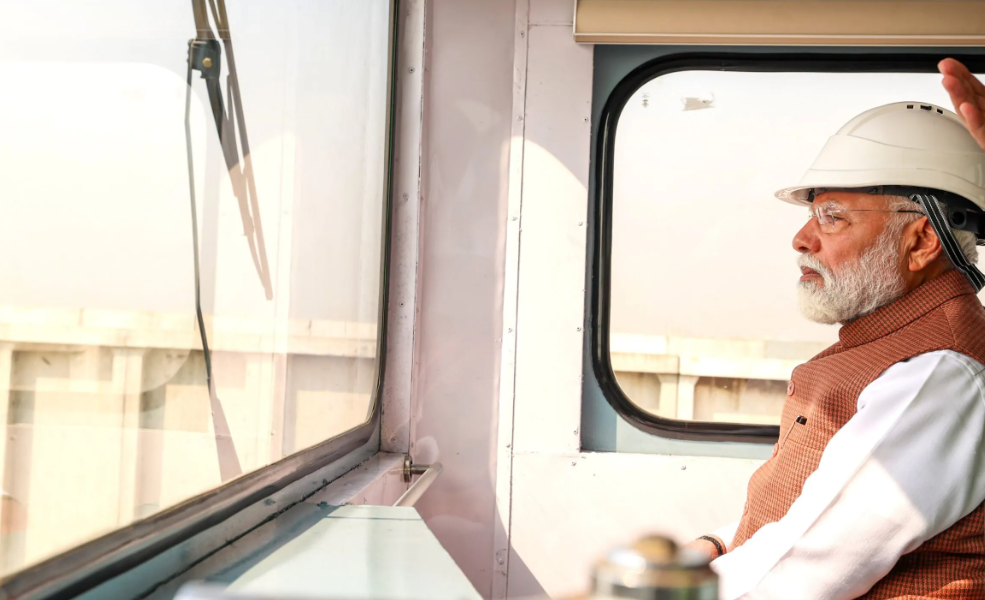
India is poised to enter the high-speed rail era, with its first Bullet Train expected by Independence Day 2027.
New Delhi
India is likely to witness a historic milestone in its transportation journey with the introduction of its first Bullet Train by August 15, 2027, according to Union Railways Minister Ashwini Vaishnaw. Speaking on Thursday, the Minister indicated that the country would see its first Bullet Train running on tracks next year, marking a significant leap in modern rail infrastructure.
Highlighting the symbolic importance of the project, Vaishnaw remarked that citizens could “buy a Bullet Train ticket on Independence Day in 2027,” underlining the government’s intent to align the launch with a moment of national pride. He described the upcoming service as a transformational step for Indian Railways, comparable to the impact made by the Vande Bharat Express trains over the past few years.
The Minister noted that the Vande Bharat Express chair car has generated a strong sense of confidence among passengers nationwide. According to him, the modern design, comfort, and safety standards of Vande Bharat trains have been widely appreciated, leading to growing demand from across the country. “Almost every Member of Parliament wants a Vande Bharat train for their constituency,” Vaishnaw said, adding that the upcoming Vande Bharat Sleeper version would usher in a new era of overnight rail journeys with similar standards of comfort and efficiency.
India’s first Bullet Train project, officially known as the Mumbai–Ahmedabad High-Speed Rail corridor, spans 508 kilometres. Of this, 352 kilometres pass through Gujarat and Dadra and Nagar Haveli, while the remaining 156 kilometres fall within Maharashtra. The corridor is designed to connect major urban and industrial centres including Ahmedabad, Vadodara, Bharuch, Surat, Vapi, Thane, and Mumbai. Once operational, the Bullet Train is expected to reduce travel time between Mumbai and Ahmedabad to nearly two hours, significantly enhancing inter-city mobility and economic integration.
According to the National High-Speed Rail Corporation Limited (NHSRCL), over 85 per cent of the corridor approximately 465 kilometres is being constructed on elevated viaducts, with 326 kilometres already completed.