


Shivamogga
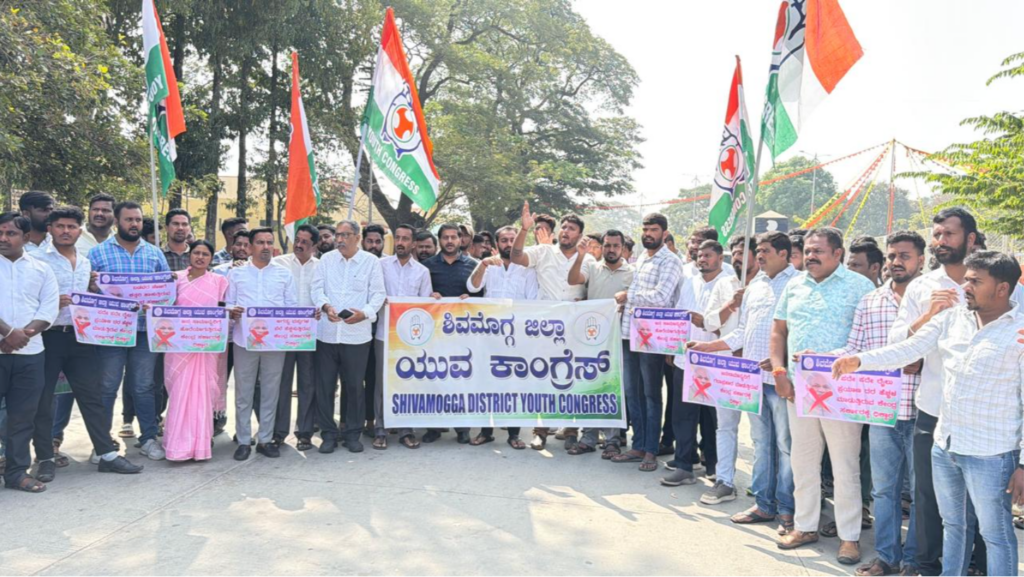
Youth Congress workers staged a protest at the railway station against repeated increases in train fares, highlighting the financial burden on ordinary citizens. HC Yogesh and other leaders condemned the central BJP government for implementing frequent fare hikes, calling it an attack on people’s daily lives. They stressed that railways are the lifeline of millions of Indians, and despite its massive operations, the government continues to raise fares unnecessarily.
Javali Nigam President Chetan Gowda criticized the second fare hike within a year, terming it highly objectionable. The protesters highlighted that while the government claims to offer benefits to citizens, it simultaneously raises prices of essential commodities. Diesel and petrol prices have risen from ₹60 to ₹90-105 per liter, LPG cylinders from ₹450 to nearly ₹1,000, and daily-use electronics and fertilizers have become more expensive, further straining public finances. Rising medicine costs also impact people’s health.
Leaders demanded the immediate rollback of rail fare increases and urged the government to ensure rail travel remains accessible, as it has historically been the lifeline of ordinary citizens. They called for strict control over essential commodity prices and warned that failure to act would trigger stronger demonstrations by the Youth Congress against the central government.
The protest saw participation from hundreds of Youth Congress members, including Vijay Kumar, Ramesh Hegde, Dheeraj Honnavile, Yamuna Rangegowda, Girish, Madhusudan, Ramu, District President Harshit Gowda, City President Charan J Shetty, Rural President Praveen, Block Presidents Girish, Saklin, Praveen, Shashikumar, and general secretaries Abdul Sattar, Malavagoppa Shivu, Reshma, Nikhil, Taupik, Babu, Gautam, Anup, Vishnu, Yogesh Bovi, Ravi, Ashok, Lingaraju, and Adarsh. The demonstrators expressed their anger over the government’s continuous price hikes and urged immediate corrective measures.