


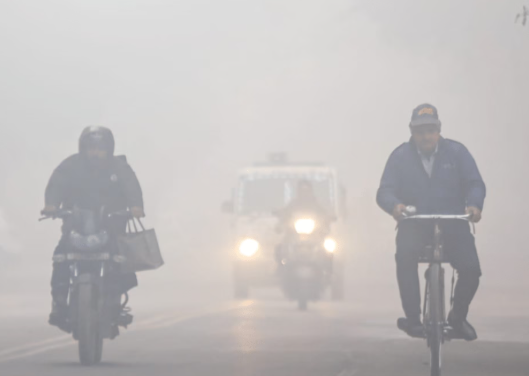
Every winter, a silent danger descends upon roads and highways across the world. It arrives without warning, transforming familiar routes into treacherous corridors of uncertainty. This danger is fog, and while it may appear ethereal and beautiful from a distance, it becomes one of the most hazardous weather conditions for motorists and pedestrians alike. Dense fog reduces visibility to mere feet, creates optical illusions, and has been responsible for some of the most devastating multi-vehicle accidents in transportation history. Understanding the nature of winter fog and learning how to navigate it safely can mean the difference between arriving home safely and becoming another tragic statistic.
The Science Behind Winter Fog
Winter fog forms under specific atmospheric conditions that are particularly common during the colder months. When the air temperature drops near or below the dew point, water vapor in the atmosphere condenses into tiny water droplets that remain suspended in the air, creating the cloudy appearance we recognize as fog. During winter, several factors contribute to particularly dense and persistent fog formation.
Radiation fog, one of the most common types in winter, develops on clear, calm nights when the ground loses heat rapidly through radiation. As the earth’s surface cools, it chills the air directly above it. If this air contains sufficient moisture and cools to its dew point, fog forms. This type of fog is especially thick in valleys and low-lying areas where cold air settles and accumulates. It typically develops after sunset and can persist well into the morning, coinciding perfectly with rush hour traffic.
Advection fog occurs when warm, moist air moves over a cold surface, such as snow-covered ground or frozen bodies of water. The temperature difference causes the moisture in the air to condense. This type of fog can be particularly persistent and widespread, sometimes lasting for days under the right conditions. In regions near large bodies of water or in areas with significant snow cover, advection fog creates hazardous driving conditions that can affect entire metropolitan areas simultaneously.
Steam fog, though less common, appears when cold air moves over relatively warmer water. This creates the dramatic effect of fog rising from the water’s surface like steam. While visually striking, it can create dangerous conditions near rivers, lakes, and coastal areas.
The Hidden Dangers of Fog-Related Accidents
The statistics surrounding fog-related accidents are sobering. According to traffic safety data, fog is a contributing factor in thousands of accidents annually, many of them involving multiple vehicles and resulting in serious injuries or fatalities. What makes fog particularly dangerous is not just the reduced visibility, but the human psychology and decision-making that accompanies it.
When visibility drops below 100 feet, as it often does in dense fog, drivers lose the ability to perceive distance accurately. The fog creates a white-out effect that eliminates depth perception and makes it nearly impossible to judge the speed and position of other vehicles. Tail lights appear suddenly, seemingly out of nowhere, giving drivers mere seconds to react. This compressed reaction time is the primary cause of the chain-reaction pile-ups that characterize major fog-related accidents.
One of the most infamous examples occurred in December 1990 on Interstate 75 in Tennessee, where dense fog contributed to a series of collisions involving 99 vehicles. The accident resulted in 12 deaths and 42 injuries, demonstrating how quickly a fog situation can escalate into tragedy. Similar incidents occur with disturbing regularity on highways around the world, particularly during winter months when fog is most prevalent and drivers may also be contending with icy roads.
The psychological aspect of driving in fog adds another layer of danger. Many drivers experience a phenomenon called velocitization, where they unconsciously increase their speed because the lack of visual reference points makes them feel like they’re moving slower than they actually are. Others experience anxiety and panic, leading to sudden braking or erratic movements that catch following drivers off guard. Some motorists pull over but leave their vehicles partially on the roadway, creating stationary obstacles that other drivers cannot see until it’s too late.
Fog also affects pedestrians, cyclists, and motorcyclists disproportionately. These vulnerable road users are harder to see in the best of conditions, and fog makes them nearly invisible. Pedestrians crossing streets in foggy conditions may not be visible to drivers until they’re within striking distance, while cyclists and motorcyclists lack the bright tail lights and larger profiles of passenger vehicles.
Essential Safety Measures for Driving in Dense Fog
Surviving a drive through dense fog requires a combination of proper vehicle preparation, defensive driving techniques, and the wisdom to know when not to drive at all. The single most important decision you can make is whether to travel. If fog is severe and your journey is not essential, postponing travel is always the safest option. No appointment, event, or convenience is worth risking your life or the lives of others.
However, if you must drive in foggy conditions, or if you encounter fog during your journey, implementing the following safety measures can significantly reduce your risk of an accident.
Slow Down Significantly: Speed is the enemy in fog. Reduce your speed well below the posted limit, adjusting it according to visibility. A useful rule of thumb is that you should be able to stop within the distance you can see clearly. If you can only see 50 feet ahead, you should be traveling at a speed that allows you to stop within 50 feet. This typically means speeds of 20-30 mph or less in dense fog, regardless of what the speed limit sign says.
Use Your Low-Beam Headlights: This is perhaps the most misunderstood aspect of fog safety. Many drivers instinctively turn on their high-beam headlights in fog, thinking more light will help them see better. This is dangerously wrong. High beams reflect off the water droplets in fog, creating a glare that actually reduces visibility. Low-beam headlights aimed downward provide better illumination of the road immediately in front of you and make your vehicle more visible to others. If your vehicle has fog lights, use them in conjunction with low beams.
Never Use Hazard Lights While Moving: While it might seem logical to use your hazard lights to increase visibility, doing so is dangerous and illegal in most jurisdictions while a vehicle is in motion. Hazard lights prevent you from signaling turns or lane changes, and they can confuse other drivers about your intentions. Save hazard lights for when you’re stopped and pulled completely off the road.
Increase Following Distance Dramatically: In clear conditions, maintaining a three-second following distance is recommended. In fog, this should be increased to at least eight to ten seconds or more. Remember, you need time to perceive a hazard, react to it, and bring your vehicle to a stop. When visibility is compromised, you need exponentially more distance to accomplish this safely.
Use the Right Edge of the Road as a Guide: Rather than following the tail lights of the car ahead, which can lead you into a collision if that driver stops suddenly or makes an error, use the painted edge line or roadside markers as your guide. This helps you maintain proper lane position without fixating on other vehicles.
Avoid Passing: Resist any temptation to pass other vehicles in foggy conditions. Passing requires excellent visibility and predictability, neither of which exists in fog. Even if another driver is moving frustratingly slowly, stay behind them at a safe distance.
Be Prepared to Stop: Keep your foot covering the brake pedal without pressing it, a technique called covering the brake. This shaves precious fractions of a second off your reaction time. Also, be aware of your surroundings and identify escape routes, such as a shoulder where you could steer if traffic ahead stops suddenly.
If You Must Pull Over, Get Completely Off the Road: If conditions become too dangerous to continue, or if you need to stop for any reason, pull as far off the roadway as possible, ideally beyond the shoulder into a parking area. Turn off all lights except your hazard flashers to avoid attracting other vehicles toward your position. If possible, exit the vehicle and move far away from the roadway, as parked cars are frequent collision targets in heavy fog.
Use Windshield Defrosters: Fog inside your vehicle compounds the visibility problem. Use your defroster and air conditioning to keep your windshield clear. Crack your window slightly if necessary to reduce moisture buildup inside the car.
Additional Safety Considerations
Beyond driving techniques, several other factors contribute to fog safety. Before winter fog season begins, ensure your vehicle is properly maintained. Headlights should be clean and properly aimed, windshield wipers should be in good condition, and your defroster should work efficiently. Consider replacing wiper blades twice a year and keeping your windshield washer fluid reservoir full.
Stay informed about weather conditions before traveling. Many weather apps and services provide fog forecasts and warnings. Highway departments in fog-prone areas often have warning systems and changeable message signs that alert drivers to hazardous conditions ahead. Pay attention to these warnings and be prepared to adjust your plans accordingly.
For pedestrians and cyclists, fog demands equal caution. Wear reflective or bright-colored clothing, carry a flashlight or use a headlamp, and avoid unnecessary travel in dense fog when possible. Cyclists should use front and rear lights and consider adding reflective tape to their bicycles and helmets.
Parents should educate children about the dangers of fog, particularly about the increased difficulty of being seen by drivers. Children waiting for school buses or walking to school during foggy winter mornings need to understand the importance of staying well off the roadway and being especially cautious when crossing streets.
The Importance of Patience and Perspective
Perhaps the most challenging aspect of fog safety is the psychological component. Modern life conditions us to expect speed and efficiency. We calculate our travel times precisely, and we become frustrated when circumstances slow us down. Fog demands that we abandon these expectations and embrace patience.
When visibility drops and you find yourself crawling along at a fraction of normal highway speed, remember that arriving late is infinitely preferable to not arriving at all. The frustration you feel in the moment is nothing compared to the lasting consequences of a fog-related accident. Give yourself extra time when fog is forecasted, communicate with those expecting you that you may be delayed, and approach the situation with the understanding that safety trumps all other considerations.
Dense winter fog transforms the everyday act of driving into a potentially deadly endeavor. The ethereal beauty of fog-shrouded landscapes belies the very real dangers it presents to motorists, pedestrians, and cyclists. By understanding how fog forms, recognizing its dangers, and implementing proven safety measures, we can dramatically reduce the risk of fog-related accidents.
The key principles are simple but require discipline to follow: reduce speed dramatically, use low-beam headlights, increase following distance, stay alert, and be willing to delay or cancel travel when conditions are severe. These measures, combined with proper vehicle maintenance and awareness of weather conditions, create multiple layers of protection against one of winter’s most persistent hazards.
As winter approaches and fog begins to settle over our roads and highways, remember that the choices you make in those low-visibility conditions echo far beyond the duration of your drive. They determine whether families remain whole, whether parents return home to their children, and whether the statistics of fog-related accidents increase or decrease. Drive with wisdom, patience, and caution, and encourage others to do the same. In the fog, visibility may be limited, but our commitment to safety should be crystal clear.