


Anekal
The Border Art Festival was held with great enthusiasm at Attibele village in Anekal taluk, organised by the Jaya Karnataka organisation. The colourful event drew large crowds and became a vibrant platform to celebrate Karnataka’s rich folk traditions and cultural heritage, particularly in the border areas of the state.
The festival, popularly known as the Gadinad Kala Utsav, witnessed the participation of several folk art troupes who added charm and energy to the celebrations. Traditional performances such as Veeragase, Puja Kunita, and Nagari mesmerised the audience with rhythmic movements, traditional costumes, and powerful drum beats. The performances reflected the deep-rooted cultural practices of the region and received enthusiastic applause from spectators.
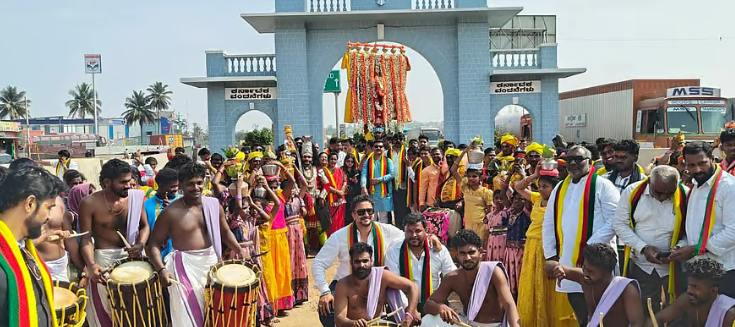
A major highlight of the festival was the grand procession taken out through the main streets of Attibele. Women, dressed in traditional attire, carried Mangala Kalashas on their heads and marched in a disciplined and devotional manner, creating a festive atmosphere throughout the village. Adding to the spiritual significance of the event, a portrait of Goddess Bhuvaneshwari was placed in a beautifully decorated palanquin and taken in procession, symbolising reverence towards Kannada culture and identity.
Speaking on the occasion, Jaya Karnataka Sangathan’s Bengaluru City District General Secretary Kiran Prabhakar Reddy said that the Border Art Festival was organised with the objective of highlighting the importance of the Kannada language and culture in border regions. He expressed concern over the declining use of the Kannada language due to increasing globalization and urbanization. The gradual reduction in the use of Kannada is not a healthy development. Such festivals are essential to preserve our language, traditions, and cultural values, he said.Anekal
The Border Art Festival was held with great enthusiasm at Attibele village in Anekal taluk, organised by the Jaya Karnataka organisation. The colourful event drew large crowds and became a vibrant platform to celebrate Karnataka’s rich folk traditions and cultural heritage, particularly in the border areas of the state.
The festival, popularly known as the Gadinad Kala Utsav, witnessed the participation of several folk art troupes who added charm and energy to the celebrations. Traditional performances such as Veeragase, Puja Kunita, and Nagari mesmerised the audience with rhythmic movements, traditional costumes, and powerful drum beats. The performances reflected the deep-rooted cultural practices of the region and received enthusiastic applause from spectators.
A major highlight of the festival was the grand procession taken out through the main streets of Attibele. Women, dressed in traditional attire, carried Mangala Kalashas on their heads and marched in a disciplined and devotional manner, creating a festive atmosphere throughout the village. Adding to the spiritual significance of the event, a portrait of Goddess Bhuvaneshwari was placed in a beautifully decorated palanquin and taken in procession, symbolising reverence towards Kannada culture and identity.
Speaking on the occasion, Jaya Karnataka Sangathan’s Bengaluru City District General Secretary Kiran Prabhakar Reddy said that the Border Art Festival was organised with the objective of highlighting the importance of the Kannada language and culture in border regions. He expressed concern over the declining use of the Kannada language due to increasing globalization and urbanization. The gradual reduction in the use of Kannada is not a healthy development. Such festivals are essential to preserve our language, traditions, and cultural values, he said.