


BENGALURU
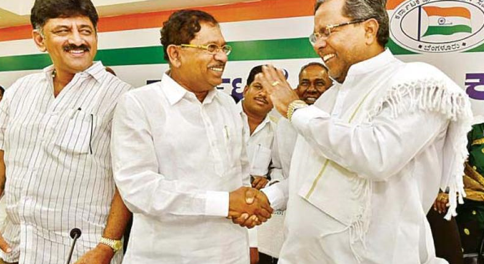
Karnataka’s political landscape is abuzz with intense discussion following a candid revelation by former Chief Minister Siddaramaiah regarding the state’s high-stakes leadership appointments. Deputy Chief Minister Dr. G. Parameshwar has officially verified these claims, confirming that Siddaramaiah played an instrumental role in securing his current ministerial position during crucial internal party deliberations.
The political stir began when a video recording surfaced from a public symposium on internal reservations held at Gandhi Bhavan in Bengaluru. While addressing attendees and reflecting on his administration’s developmental initiatives for the Scheduled Caste (SC) community, Siddaramaiah was confronted by audience members regarding past discussions surrounding a Dalit Chief Minister. Visibly emotional and candid about high-level party dynamics, Siddaramaiah disclosed how the high command initially considered creating multiple deputy chief ministerial positions.
According to Siddaramaiah’s public disclosure, he strongly lobbied the party high command to restrict the role to a single individual, successfully advocating for Dr. G. Parameshwar to occupy the singular Deputy Chief Minister seat. Furthermore, Siddaramaiah revealed that during earlier political transitions, he had personally urged leadership to elevate Parameshwar to the office of Chief Minister, though party high command ultimately pursued a different direction.
Responding to the viral video and subsequent media inquiries, Dr. G. Parameshwar addressed reporters in Bengaluru to clarify the situation. He stated that while he was not privy to every closed-door deliberation occurring directly between national leaders, Siddaramaiah had privately communicated these exact efforts to him.
This unexpected window into the inner workings of the ruling party has reignited intense debates concerning internal power dynamics, caste representation, and leadership succession strategies across Karnataka. Political analysts note that such open acknowledgments of high-command bargaining could significantly influence upcoming political alignments and community expectations as the state administration navigates complex internal dynamics.