


CH NEWS, BENGALURU
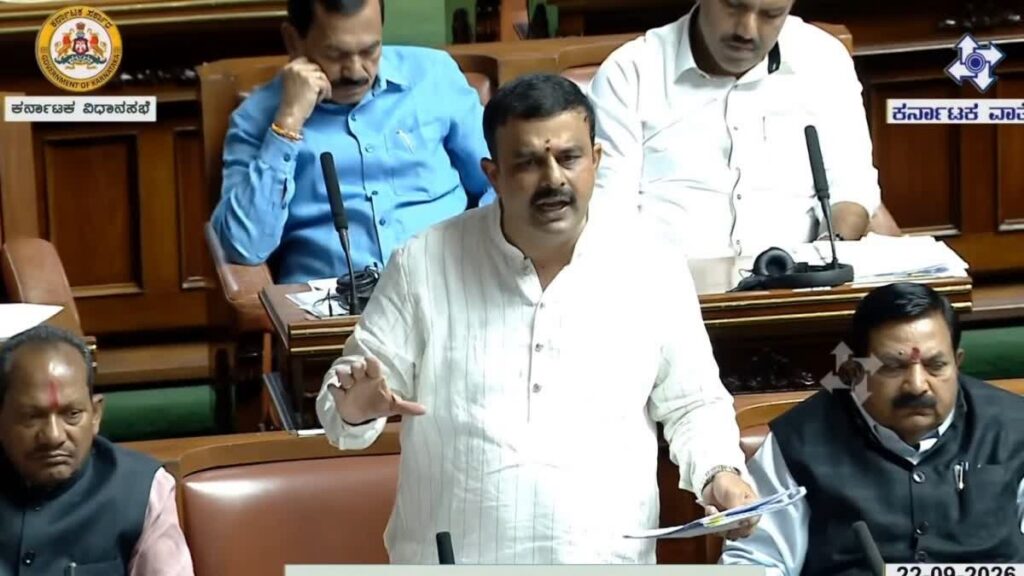
During a high-stakes legislative discussion on the Kasturirangan Report, Member of Legislative Assembly Sunil Kumar launched a scathing critique against the Forest Department, accusing bureaucratic agencies of inflicting systemic hardships on local residents under the guise of environmental conservation.
Kumar argued that the continuous bureaucratic overreach and insensitivity toward indigenous populations historically fueled extreme discontent, serving as the root cause behind the emergence of Naxalism in their district. He emphasized that local communities rejected extremist paths and instead chose to protect residents living within forest boundaries, warning that administrative indifference could have spawned vastly different consequences. Directing his remarks toward state leaders, Kumar urged authorities to closely examine the rigid functioning of the department.
Addressing the controversial Western Ghats ecology proposals, Kumar stated that the fragile mountain range is not merely a scenic vacation backdrop or a “selfie point” for city dwellers, but an ancestral homeland where generations have built their lives in harmony with nature. “We coexist with various forms of wildlife and insects. We have faced many challenges due to the Kasturirangan Report,” he remarked. Criticizing armchair environmentalists sitting comfortably in Bengaluru who advocate for strict Eco-Sensitive Zone restrictions, he challenged critics to try building and sustaining a home under such stifling regulatory constraints.
The legislator highlighted profound administrative hurdles, noting that regional bureaucratic structures create absurd bottlenecks for ordinary citizens. For instance, residents seeking permission to construct a basic kitchen or add an extra room to an existing dwelling must travel all the way to Mysuru to meet the Regional Commissioner, only to face rejections based on baseless assumptions that domestic spaces might be repurposed for commercial activities. Furthermore, local populations are routinely denied permission to lay drinking water pipelines or construct essential rural roads, effectively weaponizing conservation laws against human survival. While water resources originate directly within their hill regions, locals face severe supply restrictions while water gets diverted to distant urban centers.
Challenging the viability of top-down conservation frameworks, Kumar asserted that attempting to safeguard ecosystems by displacing indigenous human culture is fundamentally foolish. He highlighted that Western Ghats communities are the original pioneers of environmental protection, noting that wildlife like peacocks roam freely in local courtyards just as domestic fowl do. He cautioned that merely rejecting the Kasturirangan Report without compiling a meticulous itemized list of regional objections would amount to a hollow political gesture, warning that failing to act decisively could lead the National Green Tribunal to dismiss state pleas and play recklessly with people’s livelihoods.
“The Forest Department is known more for causing hardship to the public than for forest conservation. Sunil Kumar, BJP MLA”
Rejection of eco sensitive classifications
The MLA argued that displacing human culture under the guise of environmentalism is counterproductive, pointing out that local communities have traditionally pioneered conservation efforts. Kumar criticized policies that divert water originating in the Ghats away from local residents while denying permissions for basic civic infrastructure and road construction. He warned that formally rejecting the Kasturirangan Report without detailing specific objections would amount to playing with people’s lives, urging a structured, ground-up approach.