


Malingaraya Pujar
CH NEWS
Severe monsoon failure has pushed the ecologically sensitive Kappatagudda Wildlife Sanctuary, historically known as the ‘North Sahyadri’, into an unprecedented drought, prompting the Forest Department to launch large-scale tanker operations to sustain local wildlife.
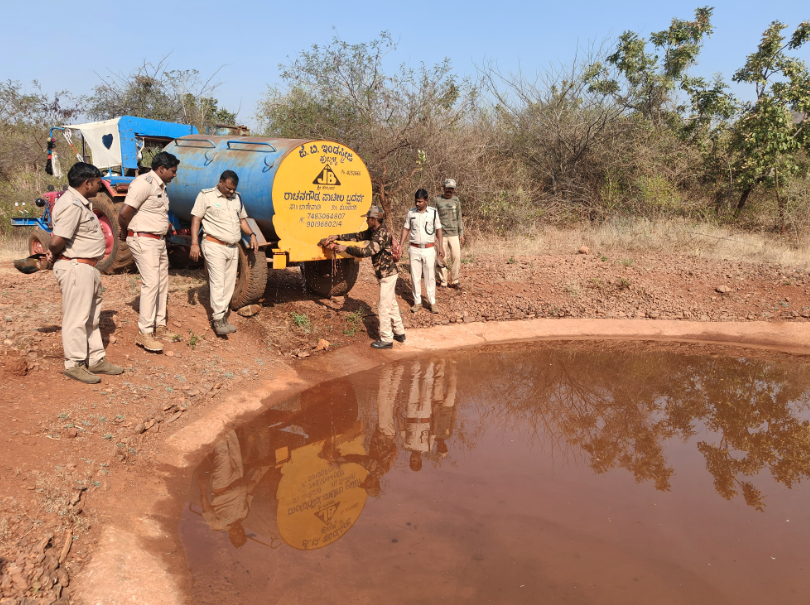
With seasonal rainfall drying up prematurely, natural streams, forest ponds, and rivulets across the hill range have turned into dry rubble. The acute water crisis threatens hundreds of wild animals and rare bird species inhabiting the reserve, including leopards, wolves, jackals, porcupines, and blackbucks. In response, forest officials have undertaken an emergency exercise to replenish artificial cement watering holes and stone troughs spread across the hilly terrain using heavy water tankers.
Ordinarily, tanker-based water replenishment is reserved for the peak summer months of March and April. However, dry winter conditions compelled authorities to act months in advance. The proactive supply aims to prevent dangerous human-wildlife conflict; forest officials feared that severe dehydration and lack of natural prey would drive leopards and wolf packs out of forest boundaries into nearby agrarian villages in search of water.
The prolonged dry spell has also dealt a severe blow to regional tourism. Following the typical monsoon season, Kappatagudda’s rolling hills traditionally attracted thousands of weekend trekkers, environmentalists, and nature enthusiasts eager to witness misty green landscapes. Without rain, the hills have turned parched and brown, leading to a steep decline in visitors and leaving popular tourist viewpoints deserted.
Beyond wildlife and tourism, conservationists are deeply concerned about Kappatagudda’s rich botanical heritage, which hosts over 400 species of rare medicinal plants. The loss of ambient soil humidity has begun withering delicate native herbs. Despite difficult terrain and steep unpaved routes, forest teams continue daily tanker runs. Recent camera-trap footage confirmed the initiative’s success, capturing leopards, wolves, and nocturnal animals regularly visiting the replenished watering holes
‘’Due to severe lack of rain, there is a water problem in the Kappathagudda area, due to which water is being pumped into artificial wells. Also, a CCTV camera has been installed to track the movement of animals’’ Santoshkumar Kenchappa’s, DCF Gadag