


Rural Clean Energy
SIRSI
India is an agricultural country where most people depend on farming and dairy. Large amount of cattle waste is generated every day across rural areas. To manage this, Gobar Dhan scheme was launched under Swachh Bharat Mission Gramin in 2018. The scheme converts cow dung and organic waste into biogas and fertilizer.
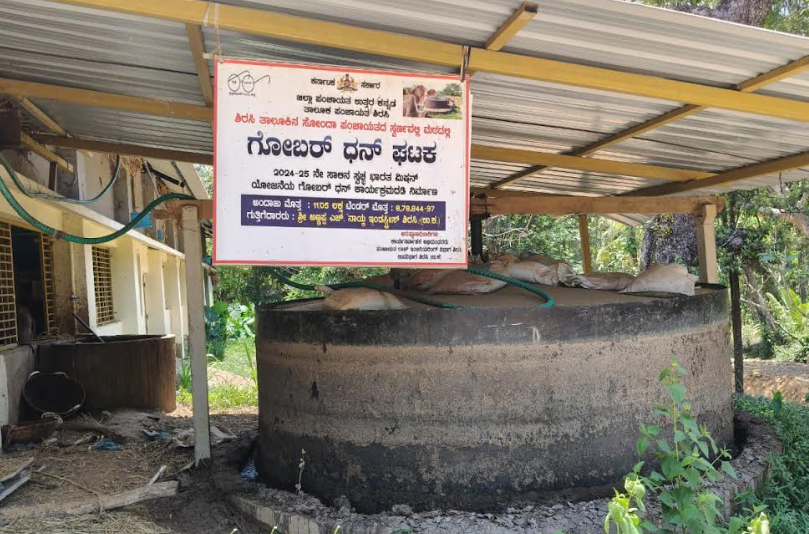
The gas is used for cooking and helps reduce LPG cylinder use in villages. Swarnavalli Mahasamsthan Math in Sirsi has successfully adopted this system in its cowshed. It has over eighty cows producing hundreds of kilograms of dung daily. The math provides food to students and devotees during events and festivals. Earlier, large money was spent every year on LPG cylinders for cooking.
Now Gobar Dhan unit produces 15 to 18 kg of gas daily. This has fully reduced dependence on commercial gas cylinders and saved money. The slurry from the unit is used as organic fertilizer for farming. Officials say the project also supports clean energy and waste management goals. The PPP model helps government and local institutions work together effectively. This model is seen as a success in Uttara Kannada district.
Officials believe it can be expanded to more community kitchens and cow shelters. It is also useful during LPG shortages and supports rural energy needs. Local leaders say the scheme improves sanitation and creates economic value. The district administration says five Gobar Dhan units are already working successfully. Officials call it a model project for sustainable rural development in Karnataka. The Swachh Bharat Mission continues to promote such renewable energy projects across India. Experts say Gobar gas helps reduce pollution and supports circular economy practices.
Villagers benefit through savings and better use of farm and kitchen waste. Authorities hope more institutions will adopt this eco friendly technology soon. This initiative strengthens rural energy security and reduces environmental pressure significantly. It is expected to grow further with government and community support in coming years. Such projects are becoming key solutions for clean cooking energy in rural Karnataka. Officials encourage wider adoption across temples schools and rural community centers. Progress continues steadily.